Why don’t employees collectively rebel against organizational injustice?
- By Yoann Bazin
Pages 140 to 145
Cite this article
- BAZIN, Yoann,
- Bazin, Yoann.
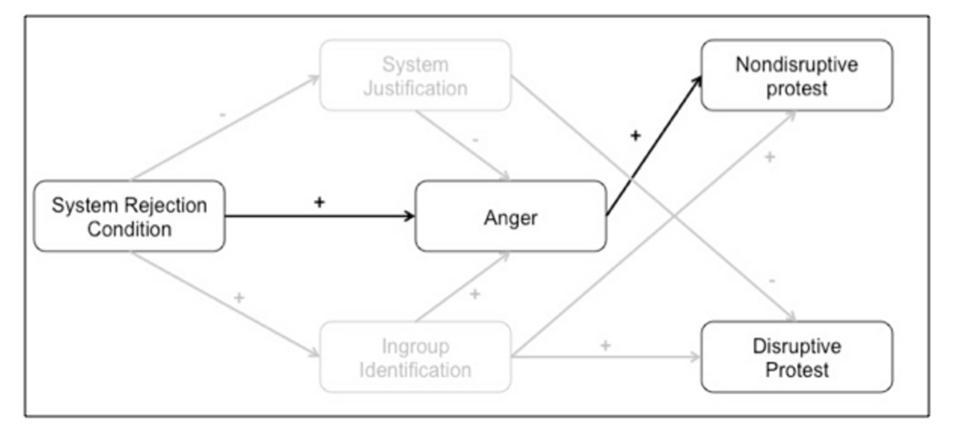
- Bazin, Y.
https://doi.org/10.3917/mana.192.0140
Cite this article
- Bazin, Y.
- Bazin, Yoann.
- BAZIN, Yoann,
https://doi.org/10.3917/mana.192.0140
1 The Dardenne brothers’ movie Two Days, One Night can be understood as the story of an injustice of which all the actors are acutely aware, but against which none of them knows how to actually rebel. Whether they intend to vote to receive a €1000 bonus or for maintaining Sandra in her position, few are at ease with a decision they have to make within the frame imposed by Dumont, their boss. All through the movie they doubt and argue, they apologize and find excuses, they get annoyed, angry or sad, but in the end they do not challenge the authority, or even question the frame.
2 The questions I would like to tackle, then, are: What drives men and women not to rebel when faced with such an obvious injustice? If they did wish to, how could Solwall’s employees protest against the authority of the boss who imposes such a situation? Why, beyond individual protests and frustrations, can they not build a collective opposition?
3 To answer these questions I draw on Nicolini’s (2009) methods for studying organizational practices, and zoom in and then out on Sandra’s situation. In the following section, I start by focusing on the individual emotions and dilemmas of Solwall’s employees by referring to the many studies conducted in psycho-sociology on rebellion and protest. I then examine the more collective issues of workers’ mobilization in the literature on social movements. I conclude on the sad acknowledgment of the infinite difficulty encountered by outraged individuals facing an authority against which they try to rebel.
WHY DO(N’T) MEN AND WOMEN REBEL ?
4 For a long time now, sociologists and political scholars have studied matters of collective action and social movements (Davies, 1971; Olson, 1965; Tilly, 1975). A classic reference in this literature is Ted Gurr’s book, Why Men Rebel (Gurr, 1970), which grounds protests in psycho-sociology, and more precisely in actors’ frustration and aggressiveness. Gurr’s theories have initiated a stream of research trying to understand the variables and thresholds of protest around one main question: At which point do men and women come to rebel?
5 Rebellion is not simply triggered by any, however intense, feelings of frustration or pain. Indeed, many variables, acceptance of exploitation in submission to authority (Zinn, 1968) or social dominance (Sidanius & Pratto, 1999), for instance, can limit it. One of the most studied variables in the academic literature is the impact of system-justifying discourse on actors’ mobilization (Jackman, 1994; Jost & Banaji, 1994; Kluegel & Smith, 1986). Scholars of this perspective focus on “the manner in which consensually endorsed system-justifying ideologies (or legitimizing myths) contribute to the stability of oppressive and hierarchically organized social relations among groups” (Jost & Sidanius, 2004: 11).
6 Jost et al. (2012) study the effects of system justification, group identification, collective emotions and uncertainty salience on protest, and, more precisely, on disruptive and non-disruptive forms of protest. These variables clearly echo the situations presented in Two Days, One Night: solidarity and cohesion among employees (or lack thereof), frustrations, sadness, fear and anger, hierarchical pressure and domination, discussions and arguments between Sandra and her colleagues.
7 One of the issues studied by Jost et al. (2012) at the centre of the movie is uncertainty salience, which manifests itself in the precariousness and vulnerability of the employees’ situations, and consequently in their need for the €1000 bonus, and their fear of the future (inside and outside of the company). When Willy tells Sandra that he is going to think about voting for her, his wife instantly gets annoyed and aggressive: “There is nothing to think about! (…) I wish we could help you, but I’m unemployed since February. And without the pavement that we recuperate and sell we cannot make ends meet”. Moreover, system justification or submission to an authority figure provide a substantial decrease in uncertainty, even if the near future remains unclear. In this context, rebellion and protest would trigger risk and unpredictability (Jost & Hunyady, 2005), whereas authority, stereotypes and justifying discourses bring a sense of order and structure (Calogero & Jost, 2011).
8 Two trends can be seen in the exchanges between Sandra and her colleagues: they are afraid of the consequences of the vote and, more importantly, they do not seem to feel a sense of belonging to a collective.
Mireille – But if I vote for you, I lose my bonus.
Sandra – I’m not the one who decided that
Mireille – It’s not me either… The others agree to lose their bonus? (…)
Juliette it’s easy for her (…) Me, I can’t afford it
10 The first trend clearly relates to uncertainty salience, the second is rooted in the issue of group identification. Members of a group with which they strongly identify are more likely to engage in protest and rebellion (Abrams, 1992; Simon & Klandermans, 2001). Moreover, strong emotions, such as anger, if shared in a group, significantly reinforce collective movements (Martin, Scully & Levitt, 1990; Van Zomeren, Postmes & Spears, 2008).
11 In the movie, the emotional reactions of actors tend to conflict. Their respective frustrations trigger a potential for rebellion, but the salience of their uncertainty weakens it. Moreover, the fact that Sandra has to meet her colleagues one by one during the weekend adds an important variable. Indeed, these face-to-face meetings are symptomatic of an individualization of employees in Solwall, a phenomenon that actually happens in many corporations, and which renders the emergence of a collective reaction particularly difficult. Gazi Islam offers, below, a detailed analysis of the temporality of Two Days, One Night (workweek vs. weekend) and of its consequences on the relationships between actors.
12 The model offered by Jost & al. (2012) (see Fig. 1) can help us represent, analytically, the situation in which Sandra and the other employees of Solwall find themselves in Jean-Pierre and Luc Dardenne’s movie.
13 Uncertainty salience could reinforce system justification rhetoric, but in that case, the lack of any reflexive or analytical discourse would just maintain actors in their emotional reactions. Moreover, the lack of cohesion (or “ingroup identification”) among the workers’ collective triggers two main dynamics: (1) a low ability to consider and organize any form of protest, and (2) a tendency to protest in a non-disruptive manner, meaning in ways that do not really question the frame from within which injustice and frustration emerge. In that case, the vote imposed by Dumont that aims to transfer the responsibility of the decision to his employees remains unchallenged. Every time Sandra mentions that the situation is not her fault, her colleagues annoyingly remind her that it is not theirs either.
14 However, these psycho-sociological considerations remain limited by their focus on mainly individual emotions and dilemmas. Consequently, after having zoomed in on the actors, I shall now zoom out and try to account for the absence of collective organization or protest. Studies of social movements provide a powerful conceptual framework for this.
WHAT ARE THE CONDITIONS NECESSARY FOR A COLLECTIVE PROTEST TO EMERGE?
15 Following Sandra’s personal trajectory, Two Days, One Night can also be seen as the story of the failure of a social movement; the story of one that could, but does not emerge. According to Neveu (2005: 10), social movements are “concerted forms of collective action supporting a cause”. More broadly, they have also been seen as collective enterprises aiming at asserting “new public values” (Ganz, 2010: 1) and establishing new orders of life (Blumer, 1946). In the movie, however, the order does not change; it does not even come close to being challenged. But what, then, is missing in the case of Solwall that prevents a social movement, even a local and limited one, to emerge?
16 A social movement is partly built on the identification of an adversary or something to be against, which is often unclear and changing, but helps to structure a collective protest (Neveu, 2005). The fluidity of this “against” allows actors with potentially very different understandings, values and emotions to come together. To understand this phenomenon, Gurr (1970) builds on the concept of “relative frustration”. It is defined by a state of tension, an expected or desired satisfaction, the absence or denial of which triggers a potential for discontent, anger and even violence. It is relative because it depends on a comparison, and is therefore contingent on the social contexts and norms that define systems of expectation. From then on, the key question becomes at which point does the conjunction of individual frustrations turn into collective action.
17 It becomes obvious, when one sees Kader, Nadine and Timour, or when one witnesses the violence of Yvon’s son toward his own father, that the frustrations of Solwall’s employees are extremely high. Almost no one defends the company and Dumont’s decision, or even appears slightly satisfied with their situation. As a matter of fact, Timour bursts into tears when Sandra comes to see him:
Timour – I’m so happy you came. Since yesterday I feel guilty to have voted for my bonus. I’m so sorry
Sandra – Don’t apologize, I can understand… 1,000€…
Timour – No. I’m ashamed.
19 What, then, is missing from these individual frustrations that stops them from triggering a collective action? According to the academic literature on social movements, the threshold is generally reached through the emergence of a discourse that “tells the story” (Ganz, 2010) and gives sense to lived experiences, and through organizations that channel and frame emotions toward resource mobilization (McCarthy & Zald, 1977).
20 Discourse can transform a crowd of frustrated actors in a social movement by giving them a shared identity, a collective dimension. As Neveu (2005: 100) explains: “In their study of a pacifist mobilization in a small town near Amsterdam, Klandermans and Oegema (1987) revealed the strategic dimension of the ‘political work’ of diffusing an explanatory and normative discourse. They offer, in particular, to decompose any social movement in two sequences. [The first is] consensus mobilization, [which] relies on this activity of propaganda. Through an activist work – posters, meetings, flyers -, it aims at diffusing a point of view on the world, the ‘problem’ at hand, and at constituting an audience favourable to the defended cause. It is only once this in-depth work is achieved that a ‘mobilization of action’ [as the second sequence] can occur”.
21 In Two Days, One Night, there is a chronic lack of structuring discourses that could characterize the injustice of Sandra’s situation. What we are witnessing instead is individual discussions, personal stories and trajectories that are expressed, influence each other, and sometimes clash. Actors remain focused on local emotions and individual frustrations in the face of injustice. There is very little distance in the discussions and negotiations between Sandra and her colleagues. Even the justifications of their situations, or of the “system”, to use the vocabulary of psycho-sociology, tend not to include mention of any social, managerial or political frames of reference. Their collective inertia is all the more important for the fact that a crucial element of social movements remains absent from the movie: the organization.
22 Indeed, discourse, as powerful and unifying as it can be, is not sufficient. Discourses accumulate without necessarily leading to directed or effective action. However, when coupled with an organization (political party, union, NGO, etc.), a social movement can make better progress. Tilly (1986) understands the regularities in the many forms of the organized actions of social movements to be variations around “repertories of collective action”. To stake their claims, actors can be inspired by pre-existing, more or less codified, but unevenly accessible patterns of protesting actions. Depending on the context and specifics of the organization, marches, demonstrations, public meetings and strikes are the classic institutionalized forms of demand, with infinite variations and innovations: press campaigns, lobbying, happenings, gatherings, occupations, etc.
23 The chronic absence of any “political” discourse in Two Days, One Night can be understood through the symptomatic, and yet discrete, absence of workers’ unions, employees’ representatives, or even mere references to labour law (Bénédicte Vidaillet comments relevantly, above, on the legal aberration of such a situation). Discourse in the film remains partly personal because Solwall’s employees do not have any wider external references that could be provided by social movement organizations. Where unions eventually recuperate frustrations, and sometimes manipulate them, they also provide the opportunity to escape the trap of individualization.
24 A study conducted by Gamson (1975) on 53 social movements in the US shows the essential role of their organizations in terms of efficiency and success. Consequently, the Anglo-Saxon academic literature tends to focus on social movement organizations (McCarthy & Zald, 1977), and organizations have thus become the conceptual basis used to analyze and account for the way in which social movements structure groups, discourse and resource mobilization.
25 From this perspective, Two Days, One Night is the story of a social movement that does not happen. But there seems to be a close, latent potential in the suffering and frustrations of Sandra, of course, but also Miguel and Yvon’s son. Hélène Picard (above), relevantly underlines the binary oppositions ( “me or them”, “her or my bonus”) that haunt Sandra and her colleagues. Yet, a collective reaction does not occur. And it cannot, partly because Solwall’s employees lack the very resources, rhetorical and organizational, that would allow them to gather, think of themselves as a collective and thus act together. The absence of “political consciousness”, linked to a chronic lack of political references and any kind of organization, fundamentally limits their ability to escape the narrow context in which Dumont has them trapped.
CONCLUDING ON A DEAD END
26 Sadly, Sandra’s situation is far from exceptional. The emotions and frustrations of Solwall’s employees are painfully mundane and unfortunately constitute the actual day-to-day life of many people. Injustice, in corporations and in society, is an integral part of our lives and does not always trigger indignation, let alone mobilization. Some may not warrant it, but some injustices are not acceptable. The question that then remains, and that Two Days, One Night asks, is essential: If we need to, will we be able to face and deal with these injustices together, as a collective? And, if so, how can we prepare ourselves?
27 The movie can be seen as a story of personal emancipation: Sandra recovering part of her freedom. I choose here to understand it as the failure of a collective action. The Dardenne brothers show us the painful difficulty, and somehow the inability, of actors to gather and unite; not only to protest, but simply to be united in order not to be alone. Sandra’s colleagues are not responsible for the situation in which their boss has put her. As Willy says when she goes to him: “I didn’t vote against you, I voted for my bonus. Dumont connected the two, not me”. But does this mean they are totally unaccountable for the situation?
28 Social movements, whatever their form, are counter-powers, by definition misaligned with, if not opposed to, the context from which they emerge. They can be political or union led, as well as spontaneous and independent. And they are not necessarily revolutionary. But they have to be collective by essence. Their force and necessity lie there, this is what the Dardenne brothers shed light on. While they also illustrate how difficult collective movements can be, they perfectly demonstrate the extent to which renouncing the collective and accepting individualization can be a dangerous dead end, not only for the rights, but also for the survival of the employee.
REFERENCES
- Abrams, D. (1992). Processes of social identification. In G. Breakwell (Ed.) The social psychology of the self-concept (pp. 57-100) London, UK: Academic Press.
- Blumer, H. (1946). Collective Behavior. In A. M. Lee (Ed.) A new outline of the principles of sociology. New York, NY: Barnes & Noble.
- Calogero, R. M., & Jost, J. T. (2011). Self-subjugation among women: exposure to sexist ideology, self-objectification, and the protective function of the need to avoid closure. Journal of personality and social psychology, 100 (2), 211.
- Davies, J. C. (1971) Why men revolt and why. New York, NY: Free Press.
- Gamson, W. A. (1975) The Strategy of Social Protest. Homewood, LA: Dorsey.
- Ganz, M. (2010). Leading change: Leadership, organization, and social movements. Handbook of leadership theory and practice, 19.
- Gurr, T. R. (1970). Why men rebel Princeton. NJ: Princeton University.
- Jackman, M. R. (1994). The velvet glove: Paternalism and conflict in gender, class, and race relations, Los Angeles, CA: University of California Press.
- Jost, J. T., & Banaji, M. R. (1994). The role of stereotyping in system-justification and the production of false consciousness. British journal of social psychology, 33 (1), 1-27.
- Jost, J. T., & Hunyady, O. (2005). Antecedents and consequences of system-justifying ideologies. Current Directions in Psychological Science, 14 (5), 260-265.
- Jost, J. T., & Sidanius, J. (2004). Political psychology: Key readings, New York, NY: Psychology Press.
- Jost, J. T., Chaikalis-Petritsis, V., Abrams, D., Sidanius, J., Van Der Toorn, J., & Bratt, C. (2012). Why men (and women) do and don’t rebel effects of system justification on willingness to protest. Personality and Social Psychology Bulletin, 38 (2), 197-208.
- Klandermans, B., & Oegema, D. (1987). Potentials, networks, motivations, and barriers: Steps towards participation in social movements. American sociological review, 52 (4), 519-531.
- Kluegel, J. R., & Smith, E. R. (1986). Beliefs about inequality: Americans' views of what is and what ought to be, New York, NY: Transaction Publishers.
- Martin, J., Scully, M., & Levitt, B. (1990). Injustice and the legitimation of revolution: Damning the past, excusing the present, and neglecting the future. Journal of Personality and Social Psychology, 59 (2), 281.
- McCarthy, J. D., & Zald, M. N. (1977). Resource mobilization and social movements: A partial theory. American journal of sociology, 82 (6), 1212-1241.
- Neveu, E. (2005). Sociologie des mouvements sociaux. Paris: La Découverte.
- Nicolini, D. (2009). Zooming in and out: Studying practices by switching theoretical lenses and trailing connections. Organization Studies, 30 (12), 1391-1418.
- Olson, M. (1965). The logic of collective action. Cambridge, MA.: Harvard University Press.
- Sidanius, J. P., & Pratto, F. F. (1999). Social dominance: An intergroup theory of social hierarchy and oppression. Cambridge, MA: Cambridge University Press.
- Simon, B., & Klandermans, B. (2001). Politicized collective identity: A social psychological analysis. American psychologist, 56 (4), 319.
- Tily, C. (1975) Revolution and collective violence. In F. I. Greenstein & W. P. Nelson (Eds), Handbook of Political Science: Macropolitical theory, (Vol. 7, pp. 483-555), Reading, MA: Addison-Wesley.
- Tilly, C. (1986). La France conteste : de 1600 à nos jours. Paris: Fayard.
- Van Zomeren, M., Postmes, T., & Spears, R. (2008). Toward an integrative social identity model of collective action: a quantitative research synthesis of three socio-psychological perspectives. Psychological bulletin, 134 (4), 504.
- Zinn, H. (2002). Disobedience and democracy: Nine fallacies on law and order (Vol. 4), Cambridge, MA: South End Press.