Auditor Size and Audit Quality Revisited: The Importance of Audit Technology
Pages 111 to 144
Cite this article
- SIROIS, Louis-Philippe,
- MARMOUSEZ, Sophie
- and SIMUNIC, Dan A.,
- Sirois, Louis-Philippe.,
- et al.
- Sirois, L.-P.,
- Marmousez, S.
- and Simunic, D.-A.
https://doi.org/10.3917/cca.223.0111
Cite this article
- Sirois, L.-P.,
- Marmousez, S.
- and Simunic, D.-A.
- Sirois, Louis-Philippe.,
- et al.
- SIROIS, Louis-Philippe,
- MARMOUSEZ, Sophie
- and SIMUNIC, Dan A.,
https://doi.org/10.3917/cca.223.0111
Notes
-
[1]
We use the expressions “Big 4” and “non-Big 4”, commonly used in the audit literature, to respectively designate the major audit firms whose brand-name are internationally recognized, and all other firms who operate, in general, merely at the national or local level. Throughout the article, the designation “Big 4” also refers to the former “Big 5”, “Big 6” or “Big 8” appearing in the literature, depending upon the study period.
-
[2]
In our article the term “auditor” generally refers to the audit firm taken as a whole. The terms “auditor” and “audit firm” are, for the most part, employed as equivalents.
-
[3]
For example, WebCPA (2008) reports that “Deloitte plans to invest $300 million to create a learning and leadership development centre in Westlake, Texas (…)”.
-
[4]
Sutton (1991) demonstrates that the general conclusions of the EFC model are robust with a wide range of model specifications, including Bertrand competition (price competition). The main advantage of the Cournot model (quantity competition) rests in its simplicity and the culmination in a symmetric equilibrium where there is no significant difference between the auditors of a given group (for example, between the Big 4). A symmetric equilibrium is in effect closer to the observed structure of the industry.
-
[5]
For simplicity, we assume for the moment that all audit firms are identical.
-
[6]
Note that according to equation (2), the optimal auditor choice is such that client firms maximize the following:Hence, it is clear that the optimal auditor choice is such that the δi/pi ratio is maximized.
-
[7]
Of course, this assumes that the interests of agents responsible for auditor selection (i.e., managers and audit committees) are aligned with shareholders’ interests (for example, when investor protection regime is stronger and/or when markets are more efficient). Otherwise, the assumption that client firms optimally choose the highest audit quality possible does not hold. We return to this in Section 3.2.2.
-
[8]
The fixed cost of achieving minimal audit technology is essentially considered an entry cost and is included in δ.
-
[9]
More specifically, c is the ‘weighted average marginal cost per audit hour’. For the most part, this corresponds to labor costs per hour, weighted according to the ‘mix’ of labor (i.e., differences in audit effort and expertise for audit work performed by partners, managers and staff auditors). Note also that, in the necessary objective to simplify for modeling purposes, we exclude auditor ‘legal risk’ and ‘reputation risk’ from our analysis. In other words, the costs associated with these risks do not constitute parameters of the auditors’ cost function in the EFC model so that we can focus on some attributes of clients’ demand for audit quality and on the impact of these on auditors’ strategic investments in technology.
-
[10]
Adapted from Sutton (1991, p. 50) and Sutton (1998, Appendix 15.1).
-
[11]
See Sutton (1991, Section 3.5) for formal proof.
-
[12]
Of course, this would be equivalent to the current literature in which auditor size is exogenous and used to explain the difference between Big 4 and non-Big 4 audit quality. Although we acknowledge audit firm size itself may have an impact on the investment strategy a firm pursues (e.g., incentive, capital limitation, etc.), our objective is to illustrate a mechanism by which auditor size and audit quality both evolve endogenously.
-
[13]
Evidence that client firms optimally select their auditor to maximize firm value net of audit fees paid comes from Hogan (1997). She finds in a sample of IPOs that owners select the type of auditor (i.e., Big 4 vs. non-Big 4) that minimizes the sum of underpricing and auditor compensation costs. Essentially, it is not optimal for every client firm to allocate sufficient resources αB to pay for a Big 4 audit.
-
[14]
It is important to emphasize that we focus here on the macro point of view as we study the impact of the size of the audit market in general, and the aggregate demand for Big 4 audits in particular, on the investment decisions of the Big 4 auditors. This view is largely in a logic of complementarity between the strength of the investor protection regime and the recourse to Big 4 audits. However, we acknowledge that the aggregate demand for Big 4 audits corresponds to the sum, within a market, of individual client firms’ demand and that, at this micro level, some empirical studies suggest rather a substitution effect between the strength of the investor protection regime and the demand for higher quality, Big 4 audits. More specifically, these studies show that, in response to certain agency problems, the demand for Big 4 audits increases in countries where the level of investor protection is low. This idea should be qualified, however, since the agency problems considered in these studies are overall less frequent in these ‘weaker investor protection’ countries, as alternative governance mechanisms dominate.
-
[15]
Even if the two studies do not use the same constructs of audit quality (i.e., earnings quality for Francis and Wang (2008) and audit fees for Choi et al. (2008)), nor the same measures for the strength of the legal environment in which the audit firms evolve (i.e., investor protection index for Francis and Wang (2008) and auditor litigation risk index for Choi et al. (2008), two highly correlated measures), it appears important to us to compare the two studies, given that the authors themselves do so and call consecutively for future research.
-
[16]
The fact that Choi et al. (2008) treat audit fees as a direct representation of audit quality constitutes an important limitation in the interpretation of their results. Although there is an undeniable direct link between fees and audit quality, it is important to recognized that audit fees are ultimately driven by the production function of the audit firm (Causholli et al. 2010), which is influenced, in particular, by the cost of the production factors and the audit technology used. Our analysis demonstrates that this technology varies across the different audit markets.
-
[17]
Plus, depending on the degree of local price competition, a possibly small market premium proportional to the number of Big 4 auditors operating in a given market (equation (6)). When conducting empirical work, researchers should attempt to control for local market conditions which may affect the level of this premium.
-
[18]
The mergers of KPMG and Salustro Reydel in 2005 or of Deloitte and BDO Brand & Gendrot in 2006 in the French market are illustrations.
-
[19]
The observation that the audit market is a natural oligopoly dominated by the larger Big 4 could, alternatively, be explained by a model of horizontal product/service differentiation with sequential entry of players (see Ellickson (2006) for a discussion). If such a strategy of ‘pure’ horizontal differentiation dominates among the Big 4, these firms should maintain their dominant market position (more precisely, of their respective market segments) without the need of significant investments in technology, contrary to what our model describes. In other words, the Big 4 auditors would operate in isolation in their respective market segments and would not compete directly with each other. In this case, there should be no ‘escalation’ in terms of investment or evolution of audit technology.

Introduction
1The concentration of the audit market and its implications in terms of quality and fees does not constitute a new concern for regulators, but has received increasing attention in recent years (for example, European Commission 2010; GAO 2003, 2008). The model currently dominant in the audit literature struggles to provide answers to this concern, particularly because it adopts a static view of the audit sector. It provides no explanation for the fact that the audit market has evolved toward a dual structure in which a few large well-known firms dominate the market, yet a multitude of smaller firms whose services are generally considered of lesser quality continue to exist. This dominant model is based on the idea that the Big 4 audit firms [1] deliver better quality services because they have more to lose in the event of audit failure (notably, DeAngelo 1981). This idea, commonly designated as the ‘reputation and/or deep-pocket hypothesis’ presents, in our opinion, at least one major weakness: the size of the auditor [2] – and therefore its wealth and its reputation capital – is considered as exogenous (DeAngelo 1981; Dopuch and Simunic 1982; Simunic and Stein 1987; O’Keefe et al. 1994).
2In this article, we present a model that provides a new perspective on the relationship between the size of the auditor and the quality of the audit, in addition to explaining the dual and currently concentrated structure of the audit market, consisting of the Big 4 and the non-Big 4 audit firms. More specifically, we use Sutton’s (1991) model of endogenous fixed costs (EFC model) – widely used in industrial economics – to propose a framework in which the quality of the audit and the size of the auditor are endogenous. One of the key elements of the proposed model is the central role of fixed costs, which we refer to as ‘audit technology’, in the determination of the level of real and perceived audit quality and audit fees.
3In our proposed model, the production of audit services of a given quality does not only involve variable inputs – in particular, the effort put forth by the auditors – as is commonly considered (for example, O’Keefe et al. 1994). In effect, the production of such services also incorporates fixed inputs, namely audit technology. Audit technology represents, in a broad sense, investments that improve the real or perceived quality, and/or efficiency of audit production (for example, advertising, training activities or standardized audit programs). We show that incorporating fixed inputs in the analysis has important implications in terms of understanding the production of audit quality, the behavior of audit firms and the evolution of the audit market in general.
4We suggest, in fact, that there is a fundamental difference between the Big 4 and non-Big 4 as regards their audit technology investment strategies. We hypothesise that the Big 4 compete on audit value, defined as the ratio of quality to audit price, by making fixed investments in technology. Our model allows us to describe how and why the audit market evolves naturally toward an oligopoly in which a few large auditors, namely the Big 4, delivering superior quality services, dominate the market. In addition, the level of audit technology investment increases with market size and other characteristics, such as the importance of investor protection, which helps explain how the audit market evolves over time and around the world.
5Finally, rather than providing an answer to the question: “Why is the quality of the services offered by the Big 4 superior?”, we propose a response to the more fundamental question: “Why are the Big 4 … the Big 4?”. The model we present is meant as a tool to guide reflections about the evolution of the audit market, the state of competition between auditors, and the impact on quality and audit fees. It allows us to offer an approach consistent with our current understanding of the audit sector and examine part of the auditing literature through a new lens, namely reconciling empirical results that could appear otherwise contradictory (e.g., Choi et al. 2008 and Francis and Wang 2008). We contribute to audit research thanks to this model that represents, in a way, an extension of the literature since it is not based on the ‘reputation and/or deep-pocket hypothesis’, but rather is based on reasonable and less binding assumptions that clients value greater audit quality and that the production of this quality requires not only variable inputs, but also fixed inputs. We also present the empirical implications of the model, which will help guide future empirical research in the area, in addition to contributing to the current debates concerning the audit market.
6In the next section, we present the dominant model of audit quality in order to pave the way for introducing the EFC model which provides a new approach to explain audit quality. In section 2 we present the general EFC model, applied to the audit market. In section 3, we refine the model to explain the Big 4/non-Big 4 dichotomy and the dual structure of the audit market. Finally, in section 4, we discuss the empirically testable implications of our analysis, before concluding.
1 – From dominant model to a new approach to audit quality
1.1 – The dominant model in the literature to explain audit quality
7Audit quality is commonly defined as the “market-assessed joint probability that a given auditor will both (a) discovers a breach in the client’s accounting system, and (b) report the breach” (DeAngelo 1981, p. 186). Therefore, audit quality can be regarded as a function of (a) the competence of the auditor, and (b) its independence. The competence, or the ability of the auditor to discover material misstatements, is directly linked to the audit process, by which the auditor optimally determines the inputs (in particular, the effort and the technology) that it will use to provide its services. Auditor independence is not a function of the quantity of inputs, but can be considered as a state of mind that the auditor must achieve (actual independence) and demonstrate (perceived independence). It depends largely on the pressures that the auditor must confront. An independent auditor, being less exposed to economic, social, and personal pressures from its clients, will, a priori, report its findings more truthfully.
8Based on the above definition, the audit quality literature has investigated how the level, real and/or perceived, of auditor capability and independence varies across different market and institutional settings, as well as between groups of auditors. In particular, several authors show that compared to the non-Big 4, the Big 4 auditors deliver higher audit quality because they have more to lose in the event of an audit failure (see, for example, Francis 2004; Watkins et al. 2004; Knechel et al. 2013). The Big 4 are considered to have greater financial and reputational wealth at stake and may therefore have to assume proportionately higher costs of litigation and loss of reputation than non-Big 4 firms. The argument – commonly designated as ‘reputation and/or deep-pocket hypothesis’ – is that the Big 4 auditors will thus provide better quality services to limit the costs associated with a possible audit failure.
9Although the ‘reputation and/or deep-pocket hypothesis’ serves as the basis for a significant share of the audit literature, it presents at least one major weakness: the size of the auditor – and therefore its wealth and its reputation capital – are considered as exogenous. In other words, the hypothesis does not respond to a fundamental question: “Why are the Big 4 larger than the others?” It adopts a static view of the audit market and provides no explanation for the fact that the market has evolved to a dual structure in which a few large well-known firms dominate the market, yet a multitude of smaller firms whose services are generally considered of lesser quality continue to exist. Finally, questions that remain unanswered are: how do audit quality and market structure evolve over time and from one market to another; and how are audit firm size and market concentration related to audit quality and audit fees (and vice versa)? This last question seems particularly important in view of the recent concerns expressed by governments and regulatory agencies, professional associations (accounting and non-accounting), and private interest groups in the European Union, the United States and in other countries as to the high level of market concentration and its potentially negative impact on audit quality and on fees (for example, for the European Union: European Commission 2008, 2010; London Economics 2006; Oxera Consulting 2007).
10By treating auditor size as exogenous, the existing literature implicitly considers audit technology is constant and assigns it a marginal role to explain, on the one hand, audit value and, on the other hand, the differences between Big 4 and non-Big 4 auditors. The Big 4 are believed to provide better quality services than the non-Big 4 because they are a priori more independent and therefore report their findings in a more transparent manner (DeAngelo 1981) and/or because they deploy more resources in the course of performing audits (Pae and Yoo 2001). In following this approach, most studies interpret the Big 4 audit fee premium as an indication of the superior audit quality delivered by the Big 4 (Hay et al. 2006). Indeed, several authors suggest that this premium reflects, at least partially, the higher production costs resulting from more intensive audit effort (Choi et al. 2008). We believe that to understand the difference between Big 4 and non-Big 4 auditors, and thus the current state of the audit market, it is also important to explicitly consider how the cost structures of audit firms – strongly influenced by investment strategies in audit technology – may differ. Sutton’s (1991) EFC model (that we present in the following section) allows us to develop this idea.
1.2 – Proposal of a new approach to explain audit quality: general presentation of the EFC model
11Sutton’s (1991) EFC model is a relatively simple competition model which allows understanding why, particularly in some sectors, concentration remains high even though the size of the market increases and, more importantly, why the market remains competitive while concentration is high. The conclusions of the model thus run contrary to the predictions of the ‘classic’ theories of the industrial economics, in particular the structure-conduct-performance paradigm developed by Bain, which was, and still is, the source of many of the criticisms concerning the domination of the audit market by the Big 4 (for example, Subcommittee on Reports 1977 or House of Lords 2011). The model is based on the idea that, in these sectors, firms can improve their contribution margin (calculated as price minus marginal cost) through fixed capital investments. For example, firms can increase clients’ ‘willingness-to-pay’, and therefore their prices, by improving the level of perceived quality of their products or services through investments in advertising. They can also increase the actual quality of their products or services by research and development activities (i.e., product or service innovations). Firms may also invest in production technology, equipment and/or research and development to improve their production processes and organization with the objective of reducing their marginal cost (i.e., process innovations). These investments are considered as endogenous since they result from the strategy of individual firms. The more a firm decides to invest, the greater the positive impact on its margin, although at a potentially diminishing rate. When the cost of such investments is fixed and does not depend on the level of production, the benefit of fixed investments increases with the level of production (i.e., increasing economies of scale). Firms therefore have greater incentives to undertake these investments when the market size increases and justifies such investments.
12Sutton (1991) shows that, in fact, for sectors in which fixed strategic investments have a greater potential to improve businesses’ margins, the level of such investments increases with the size of the market. In fact, when the size of the market increases, firms engage in a sort of ‘race to invest’ by allocating increasing resources to advertising, research and development or to other capital investments in order to increase the relative value (quality/price ratio) of their products or services in relation to their competitors. This inevitably increases the level of investment required to enter and operate effectively in a given market. When the level of investment increases, market entry therefore becomes more difficult and some firms can be induced to merge to survive the pace of innovation, while others are simply forced to exit the market. This behavior eventually leads to a natural (stable) oligopoly with only a limited number of large firms operating in the market, notwithstanding the size reached. Fixed investments to improve the real and/or perceived quality of products or services and/or processes create an endogenous, namely strategic, barrier to entry. It should be noted that the EFC model describes the long-term equilibrium of the market. It stresses the importance of economies of scale, suggests that these may evolve endogenously and links market structure and the level of product/service and process innovations to market size.
13This simple model has been applied in many industry studies, including, for example, the retail food sector (Ellickson 2006, 2007, 2013), the banking sector (Dick 2007), or the newspaper publishing sector (Berry and Waldfogel 2010). The number of references to the EFC in the auditing literature is, to the best of our knowledge, very limited. Penno and Walther (1996) compare the structures of local markets in the United States for the auditing, legal, and advertising service industries. Their results show that, compared to the markets for legal and advertising services, the audit market is, in general, more concentrated, and is all the more so in the largest local markets. They show, in fact, a positive correlation between the size of the local market and the concentration of the audit market. Building on Sutton’s (1991) logic, they argue that this is consistent with higher discretionary expenditure in the auditing industry, compared to the other two sectors studied. In our paper, these discretionary expenditures correspond to the endogenous investments in audit technology. Penno and Walther (1996) focus exclusively on the concentration of the audit sector, without seeking to explain the dual structure of the sector or the link with audit quality.
14Boone et al. (2000) build on ‘resource-partitioning’ theory to explain the evolution of the market structure of the Dutch audit industry from 1896 to 1992. Although the authors do not refer explicitly to Sutton’s (1991) theory, the logic and implications of the theory that they use are very similar. Boone et al. (2000) explain the emergence of the dual structure of the Dutch audit industry by arguing that large firms have grown, to exploit economies of scale, by positioning themselves as generalist auditors, while smaller firms have managed to thrive by operating as specialist auditors. In their setting, audit quality does not play a central role and the authors discuss only briefly and indirectly the quality differential between Big 4 and non-Big 4 auditors. In contrast to these authors, we believe that the dual structure of the audit market in fact reflects differences in terms of quality between the Big 4 and non-Big 4 and that the EFC model can be used to formally link auditor size and audit quality.
15More recently, some authors have empirically studied the possible relationship between the structure of the audit market and quality or audit fees (Boone et al. 2012; Numan and Willekens 2012; Newton et al. 2013). To our knowledge, only Francis et al. (2013) explicitly refer to Sutton (1991) in their analysis. However, these authors offer no formal theoretical framework and only make a brief reference to Sutton, along with other industrial organizations scholars (Francis et al. 2013, note 8). We believe that in order to better understand the general evolution of the audit market structure and more particularly to inform the debate on the possible link between market concentration, and not only, quality, but also fees, it is necessary to establish theoretical foundations. To this end, in the next section we present Sutton’s (1991) EFC model which we adapt to the particularities of the external audit sector.
2 – The role of audit technology: a model
2.1 – Definition of audit technology
16Before presenting the model, it is essential to define an essential parameter, namely audit technology. Technology may take multiple forms and, in general, refers to the know-how and the competence of the audit firm. In our analysis, audit technology, in the short term, is a fixed input in the audit production process, whereas the effort is a variable input. We consider that audit technology constitutes a fixed endogenous cost because it is the result of investment decisions made by the firms, this in opposition to fixed costs which could be imposed in an exogenous manner, such as the costs associated with new regulations (for example, the Sarbanes-Oxley Act in the United States). Broadly speaking, audit technology represents investments that improve the quality (real or perceived) and/or the efficiency of the audit production process.
17An example of technology improving the real quality of the audit is a firm’s investment in human capital. Audit firms invest significant resources in recruitment and training. This is particularly true for the Big 4 [3]. Audit firms can also improve the effectiveness and efficiency of their services by investing in IT equipment, software, databases, electronic work systems and other electronic tools to aid in decision-making, which have the potential to increase quality control, risk management, decision quality and overall audit quality (Bedard et al. 2008). Once again, it is in the largest audit firms that these technologies are mostly used, due to the significant investment both in capital and in time. Finally, the existence of internal consultation departments can allow for better control of quality and the risk related to the engagements, and to assist audit teams in the treatment of complex issues. These departments or ‘technical groups’ are expensive to create and maintain and are more frequently used and better formed in the major firms (Bedard et al. 2008).
18In Sutton’s initial interpretation of the EFC model, technology corresponds to advertising (Sutton 1991). To the extent that audit quality is difficult to observe, the perception of this quality is important for clients, and investments made by the audit firms to improve the perceived quality of their services have, therefore, potential value. To improve perceived audit quality, audit firms may engage in direct (when this is allowed) or indirect (sponsorship, community involvement, etc.) advertising to stimulate brand name recognition. Promoting brand value internally may also prove beneficial for firms as it can improve employee satisfaction and boost staff and client recruitment (for example, Korney 2007). Some of audit firms’ advertising and sales efforts can be informative and help clients select the most suitable auditor. This is valued by clients as it decreases transaction costs when choosing an auditor. Overall, Big 4 audit firms appear to resort to advertising and other promotional activities more systematically, at least, they seem to draw greater benefits from such investment strategies. The study by Hay and Knechel (2010) on the deregulation of advertising in the audit sector in New Zealand supports this idea.
19Finally, technological investments may also involve process innovations and production efficiency, which allow a priori an auditor to deliver an audit of equal quality to that of its competitors, but at lower marginal cost. Gains related to these innovations are likely to be generated in several ways. In fact, most investments in technology that enhance real audit quality also likely lead to more efficient audits. This is particularly the case with investments in staff training, in software and IT equipment, and in standardized audit programs which reduce recurring costs, or investments in the national and international network of a firm, which are likely to reduce coordination and operating costs for engagements involving several geographic locations.
20Focusing on long-term fee trends of the Big 4, Menon and Williams (2001) note that the magnitude of the audit fee model coefficients for accounts receivable and inventory had declined over their sample period (1980-1997). They conclude that the increasing use of computerized audit techniques and other innovations, such as analytical procedures, have allowed the Big 4 to gradually expend less effort over time in verifying inventory and confirming accounts receivable. Similarly, Chang et al. (2011) find that Big 4 firms in Taiwan experienced greater productivity than non-Big 4 firms over the 1993-2003 period, mainly because of technical progress and, in particular, due to the accumulation of IT capital.
2.2 – Development of the basic model
21Our goal in this section is to broadly present the Cournot [4] oligopoly model, as developed by Sutton (1991), to illustrate the key elements and the implications of the EFC model for the audit industry. We propose an interpretation specific to this industry, which reflects the key features of audit services and of the audit production process.
22We start with the simplest case in which the fixed endogenous investments – in other words, audit technology – refer to investments that improve the real quality of an audit. We then extend the concept of endogenous investments to include those, such as advertising, intended to improve the perceived value of the audit, as well as those that improve audit efficiency by reducing the marginal cost, such as employee training. In section 3, we further change the model to allow for the emergence of two types of auditors: Big 4 and non-Big 4.
23In order to facilitate the understanding of the model developed below and the arguments on which it is based, we propose table 1 which brings together all the parameters used thereafter. These parameters, which appear in Sutton’s (1991) original model, are presented here as they apply to the audit market.
List of parameters used in the model


List of parameters used in the model
2.2.1 – Demand for audit services
Clients determine an optimal level of external audit services
24Modeling auditors’ investment strategies consists of describing the means by which auditors cater to their clients’ demands for services. That is why we first characterize the demand for audit services.
25Clients maximize the value of their firm by deciding on, among others, the optimal level of external audit services and the optimal level of other governance mechanisms, complementary or alternatives control activities, subject to certain budget constraints.
26In our opinion, it is relevant to consider that the external audit generates firm value primarily from three components: (1) assurance (i.e., control function of the audit which limits management’s bias, improves the quality of financial disclosures and brings credibility to the financial statements), (2) implicit financial claim stakeholders have on the auditor’s wealth in the event of an audit failure and (3) the value of the audit service itself (for example, the formal and informal advice provided by the auditor over the course of the audit). Only ‘assurance’ value, or component, is considered here to the extent that we focus on audit quality, as previously defined. Because, as stated above, auditor independence does not depend on the quantity of inputs, independence issues are excluded from our analysis so that the ‘assurance’ value of an external audit can simply be modeled as a function of an external auditor’s capability to detect material misstatements through the use of audit effort and audit technology.
27To simplify the analysis, we consider a very simple setting in which all client firms are identical and exclude other determinants of their market value from the model. Therefore, for all client firms we have:

29where π corresponds to the market value of the client firm as a function of monitoring activities (external auditing purchased from an auditor i and other governance mechanisms put in place, noted respectively as AEi and y). In accordance with the audit and governance literature, we assume that the value of the client firm is increasing in monitoring activities, although at a decreasing rate.
30As previously explained, we consider that the value of an external audit to the client firm can be modeled as a function of the auditor’s capability to detect material misstatements given their level of audit effort and use of audit technology. To illustrate, we model the value of the client firm generated from monitoring activities using a simple Cobb-Douglas function:

32The first term of equation (2) captures the value of external auditing purchased from a given auditor i and is a function of total audit effort xi (i.e., number of audit hours) and the audit technology δi used by that auditor, taking into account the proportion α ∈ (0,1) of the firm’s optimal budget on monitoring activities B (introduced below) that the client have chosen to allocate to the external audit. The technology δi is normalized to be greater than or equal to 1, with δi = 1 corresponding to the minimum of audit technology required to provide an audit of ‘standard’ quality (i.e., an audit that just complies with generally accepted auditing standards, or a GAAS audit). Consistent with the definition of audit quality presented above, the product δixi corresponds to audit quality and is strictly increasing in effort and technology.
33It should be emphasized that the inputs – effort and technology – are neither perfect substitutes, nor perfect complements and that a minimum level of both effort (i.e., labor) and technology is required to deliver an audit of standard quality. When a client hires an external auditor at a given time, the audit technology δi is considered to be fixed. In other words, in the short term the technology is a fixed input in the audit production process, whereas the effort is a variable input.
Clients choose their auditor
34As we have explained above, clients determine an optimal level of external auditing, taking into account their budget constraint. Clients buy external audit services from an auditor i [5] for a total cost of pixi. That is, total audit fees are equal to auditor’s i weighted average hourly billing rate, pi, multiplied by the total number of audit hours, xi. Other monitoring activities can be purchased at an average hourly price py. The budget constraint is reflected in the following equation:

36where B > 0 is an optimal total monitoring budget.
37B is determined like any other investment decision the clients face and is set at a stage prior to our analysis. This decision process is not explicitly modeled here and, for simplicity, B is simply taken as given. The client firms spend a portion α ∈ (0,1) et (1 – α) of their optimal monitoring budget B on external auditing and other monitoring activities respectively. The client’s characteristics, such as size or ownership structure affect B and α. The largest clients, for example, have a larger overall budget B. Likewise, those facing more marked agency conflicts tend a priori to allocate a greater share α of their budget to the external audit (Simunic and Stein 1996; Piot 2001). Certain external factors, such as the regulatory and legal environment, can also affect B and α. Our focus here is on audit quality so B and α are considered exogenous to the model and assumed sufficient to satisfy mandatory (minimum) audit requirements. We relax this assumption in Section 3.2 and examine what impact variations of B and α can have on the implications of the model.
38Note that clients will take auditor characteristic vectors, 

2.2.2 – Competition in the audit market: competition on audit quality
Modeling of the competition in the audit market
39Following our discussion above, we now model audit firm competition as a three-stage game:
40– In the first stage, auditors who decide to enter a given audit market face an entry cost σ > 0, determined exogenously and constituted, for example, of the cost of basic professional insurance.
41– In the second stage, each audit firm chooses the optimal level of technology it will employ for its audits. At this stage, the auditor incurs an additional fixed cost:

43Where δ ≥ 1 is the technology index with δ = 1 (A(δ=1) = 0) corresponding to minimal technology [8], a > 0 is the unit cost of technology improving the quality of the audit and γ > 1 determines at what speed fixed costs increase with technology δ. Higher values of γ correspond to more rapidly diminishing returns in technology.
44– The third stage corresponds to the production and delivery of audit services. Total costs incurred up to this stage are fixed and equal to F(δi) = σ + A(δi). We assume that unit effort cost is constant and independent of technology, which implies that the marginal audit production cost is constant [9]: ci(δi, xi) = c > 0, ∀i (we relax this assumption somewhat hereafter, see below, as well as Section 3.2.1).
45For simplicity, competition is modeled as Cournot. With technology level fixed and assuming all audit firms possess equivalent technology, 


47where S is equal to market size (i.e., total market audit fees, determined by the sum of clients’ budget allocated to external audit services, determined by both B and α), and N is the number of audit firms entering at the first stage. Because parameters B and α are taken as given, market size S is itself exogenous. Note as well that final-stage variable profit is increasing in S and δi (holding 

48In equilibrium, it must be that all entrants earn a non-negative final (net) payoff. With respect to technological investments determined at the second stage, entrants will face one of the following two situations:
49– The first possibility occurs when the marginal gain for a deviant auditor who sets δi slightly above 


50– The second possibility occurs when it becomes profitable to invest above the minimum level of audit technology. In this case, all entrants undertake to invest in audit technology (therefore 
51A movement from the first situation to the next identifies the key points at which capital investments in audit technology above the required minimum becomes an essential element of competition between audit firms. These points depend on market size S and fixed costs parameters σ, a and γ. Once it becomes profitable to invest in audit technology, audit firms will compete by investing increasingly in audit technology in order to offer a higher level of audit quality. Solving the game with backward induction, as Sutton (1991), yields equilibrium price:

53and technology:

Implications for audit quality
55This leads to the first observation:
56Observation 1. Ceteris paribus, audit quality is increasing in market size: 
57The proof of Observation 1 comes directly from equation (7) and the definition of audit quality retained here, namely δixi. Essentially, investments in audit technology δ are increasing in market size S as these fixed costs can be more easily supported in larger markets (i.e., economies of scale). Holding the cost of audit effort constant, as well as the number of entrants, further implies that the amount of audit hours xi purchased by individual clients remains unchanged. As a result, the level of audit quality increases through greater use of audit technology.
58Observation 1 highlights that audit quality is also driven by audit technology, rather than just audit effort (and/or auditor independence), as implicitly assumed in the audit quality literature. Furthermore, it is clear that offering higher audit quality only through greater audit effort x is not the optimal strategy for auditors. To see this, it is important to understand that when a client firm purchases an external audit, it essentially purchases a “bundle” of audit effort from a given auditor utilising a specific level of audit technology δi. The total number of hours purchased depends not only on client characteristics, but also on the technology of the chosen auditor.
59To illustrate, consider a market with two auditors: auditor i with technology δi = 1 (minimum level of technology); and auditor j with technology δj > 1. In this setting, auditor i may ‘compensate’ for its inferior technology by providing more effort on its audits such that total audit quality supplied by auditors i and j is equivalent (i.e., δixi = δjxj, avec xi > xj). Yet, because average marginal costs are equal for both auditors, ci = cj = c, their average billing rates will also be equal, pi = pj = p. The clients of auditor i therefore bear the full cost of the additional audit effort (i.e., pxi > pxj). Even if both auditors supply equal (total) audit quality, clients will opt for auditor j’s services as total audit fees will be lower. In other words, although greater effort increases audit quality, it does not enhance audit value. Finally, auditor j is strictly preferred and will be able to recover its additional investment in audit technology from the additional market shares gained at the expense of auditor i.
Implications for audit value: extending the interpretation of ‘δ’
60Thus far, we have limited our interpretation of audit technology to investments that enhance the real quality of audits performed. However, the key results of the EFC model hold under a more general setting where ‘technology’ can also refer to investments that increase the perceived quality of products or services, such as advertising, or diminish the marginal cost of these, such as process innovations (Sutton 1991, 1998). Whatever the nature of these investments, what is important is that: (1) the level of such investments is a strategic auditor-specific decision (i.e., endogenous); (2) these investments constitute costly production inputs that are fixed at the time of audit production and delivery; and (3) these investments are valued by clients and/or allow auditors to lower marginal effort costs (i.e., is reflected by an increase in the δi/pi ratio).
61When audit firms compete, they likely engage in a combination of innovations set to improve the quality – real and/or perceived – of their audits and/or the efficiency of the audit production process. Even if the general results of the EFC model remain unchanged, explicitly allowing for the possibility of process innovations requires some clarification. In the basic model, investments that enhance audit quality, real and/or perceived, are explicitly included in the model through the parameter δ. That is, auditors enhance the value of their audits (i.e., ratio δi/pi) by investing to increase δi while marginal effort cost c, and therefore price pi, remain virtually constant. However, as Sutton (1998) shows, it is also possible for firms to successfully compete and improve the relative value of their product or service by lowering their average marginal cost of production (in the case of an audit, the cost of effort) through process innovations. Consequently, the ratio δi/pi is improved by lowering pi.
62Accordingly, to interpret the results of the model, it is more accurate to focus on the relative value, δi/pi, of an audit firms’ audits rather than just on the level of audit quality resulting from δi. Because of this, it is difficult to predict which of audit quality or production efficiency is improving in market size. This is further complicated by the fact that some investments can improve both audit effectiveness, or quality, and efficiency. However, we can reformulate Observation 1 to account for the possibility of efficiency gains resulting from process innovations. This is formalised with Observation 1’:
63Observation 1’. Ceteris paribus, audit value, or relative audit quality, is increasing in market size: 
64This means that investments in audit technology (represented here as fixed costs A) are increasing in market size, with some of these investments improving audit quality, real and/or perceived, or δ, while others can lower the marginal cost of audit production, or the cost of audit effort c, and therefore the price p of the audit.
Implications for audit fees
65Interestingly, equation (6) indicates that audit firms will price their services as oligopolists according to their average marginal cost c (e.g., weighted average cost of labor) and the number of entrants N. This has important implications for the specification of audit fee models used in empirical research. The additional fixed costs, A(δ > 1) > 0, incurred by auditors investing in audit technology are, for the most part, not passed on to their clients. Rather, auditors who choose, at stage two, to invest above the minimum in audit technology can hope to recover these investments in stage three because of greater market shares. Competition for these market shares drives auditors entering a market to offer greater audit quality by investing in audit technology, while pricing their audits at the most competitive rate (i.e., billing rate p close to average marginal cost c). The equilibrium condition guaranties that auditors recover their total investments F(δ) given the number of entrants in the first stage of the game.
Implications for audit market structure
66The key result from the EFC model is that audit firms will compete on audit technology as a means to offer highly valued high-quality audits (i.e., best quality, or technology, to price ratio). This, in turn, has a profound impact on the structure of the audit industry. Generally, the concentrated structure of the audit industry and its domination by the Big 4 audit firms is argued to be the result of significant barriers to entry (for example, GAO 2003, 2008; Rose and Hinings 1999; The Economist 2004). These barriers arise, for example, from regulatory requirements, the high cost of legal liability, or the complexity of engagements and accounting rules, and are commonly assumed to evolve exogenously. As such, the current literature generally fails to account for the dynamics of the industry and ignores the role competition between audit firms plays in raising fixed costs and naturally limiting entry in the industry. The EFC framework, on the other hand, explicitly takes into consideration the interaction between audit firms and allows for fixed costs to evolve endogenously as a result of competition.
67As market size continues to increase, audit firms will compete on the respective value of their services by investing ever more aggressively in audit technology in order to enhance the quality or improve the efficiency of their audits. As firms try to gain market shares at the expense of others by investing in audit technology, there comes a point where the number of audit firms in the market does not increase with market size since further entry would drive variable profits below the total fixed costs that audit firms have engaged. Eventually, this ‘race for quality’ leads to a natural oligopoly where only a limited number of large, technology intensive, high-quality audit firms service the market, no matter how large it gets. At this stage, market structure is independent of setup costs while technological investments create an endogenous and strategic barrier to entry. Formally:
68Observation 2. The audit industry is characterized as a natural oligopoly and the minimum level of auditor concentration, measured by the market share of the dominant audit firm (C1), does not converge to 0 as the market size approaches infinity: 1/N = C1 > 0. [11]
69It should be noted here that Observation 2 helps explain the competitive environment that leads to the emergence of a group of large audit firms, the Big 4, without justifying the presence of non-Big 4. In the next section, we adapt the model to allow for the presence of the non-Big 4 with the aim of making it more representative of the true audit market in which both type of audits firms coexists.
3 – The dual structure of the market: the Big 4/non-Big 4 dichotomy
70For the moment, we have developed a simple model that explains, in particular, that the audit market may be characterized as a natural oligopoly. The objective of this section is to refine the model by making the realistic conjecture that large and small audit firms adopt different strategies in terms of investment in technology. This allows us to understand why the Big 4 and non-Big 4 coexist. We can then explain how the dual structure of the market evolves depending, among others, on factors that may affect the proportion of clients who prefer Big 4 audits.
3.1 – Justification of the coexistence of the Big 4 and non-Big 4
71Thus far, we have built on the EFC model to explain the emergence of a natural oligopoly where only a limited number of large, technology intensive, high-quality audit firms provide audit services (Observation 2). While this is a reasonable approximation of the audit market, it fails to account for the large number of small, a priori lower quality audit firms present. The model can, in fact, be easily adapted to predict this phenomenon and explain the well documented ‘Big 4/non-Big 4 dichotomy’. To do this, we conjecture that Big 4 and non-Big 4 auditors fundamentally differ in their respective investment strategies in audit technology. Formally:
72Conjecture 1. (a) 
73(b) 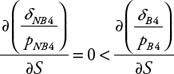
74Conjecture 1 is consistent with the academic and professional literature and essentially establishes that Big 4 auditors invest in audit technology in order to increase the value of their services (see section 2.1). That is, audit technology plays a fundamental role in the business and differentiation strategy of the Big 4, while it does not play a significant role in the strategy of the non-Big 4. Consequently, Big 4 auditors invest more in audit technology than non-Big 4 auditors and, as the EFC model suggests, they will also invest more in audit technology as market size increases (Observation 1’).
75Importantly, however, that we do not claim that the Big 4 and non-Big 4 auditors adopt different investment strategies simply because of their difference in terms of size [12]. To motivate our conjecture, rather, we merely take known differences between Big 4 and non-Big 4 auditors as an indication that these firms are likely to have adopted and continue to adopt different investment strategies. Given the implications of the EFC framework, if Big 4 and non-Big 4 auditors do adopt different investment strategies, we can provide a reasonable and coherent explanation for the ‘Big 4/non-Big 4 dichotomy’ and the observed dual structure of the audit market. We note that Conjecture 1 also leads directly to the following observation:
76Observation 3. Ceteris paribus, the difference between Big 4 and non-Big 4 audit value, or relative audit quality, is increasing in market size: 
77Observation 3 states that the value of Big 4 audits is increasing in market size, relative to that of non-Big 4 audits. This can occur either because Big 4 audit quality is increasing more rapidly than the Big 4 fee premium, or because the Big 4 fee premium is decreasing in market size (with constant or slightly improving audit quality).
78Yet, a fundamental question arises from this observation: if the Big 4 offer more valuable audits, under what conditions can non-Big 4 auditors still hold positive market shares? For non-Big 4 auditors not to be excluded from the audit market, it must be that some, possibly small, fraction of audit clients cannot afford the services of a Big 4 and/or do not benefit from the superior audit technology used by the Big 4 auditors (or at least, they do not value Big 4 audits as much as other clients). If and only if at least one of these conditions holds is it possible for less technical non-Big 4 auditors to remain in operation while adopting a different investment strategy than the dominant Big 4 firms.
79We designate by θ, with 0 < θ < 1, the proportion of clients on the audit market that prefer audits provided by the Big 4 because of their superior technology. As a result, the audit market evolves as two independent sub-markets of size θS for the Big 4 segment and size (1 – θ)S for the non-Big 4 segment. The Big 4 segment will be naturally concentrated at any S since these audit firms strategically invest significant resources in audit technology (Observation 2). On the other hand, because non-Big 4 auditors do not incur additional fixed costs, further growth in market size S brings additional entrants to that segment. Entry costs to this sub-market are limited to the exogenous costs σ (i.e., no strategic investment in audit technology). This results in a dual market structure with a limited number of large, technology intensive and thus high-quality audit firms, namely the Big 4, along with many small firms using limited audit technology and therefore providing standard quality audits, namely the non-Big 4. Unlike the Big 4 market segment, the non-Big 4 segment is highly fragmented with virtually no (vertical) differentiation between the services offered by the auditors present in this segment. In other words, non-Big 4 auditors operate in an almost perfectly competitive market segment and will price their audits at average marginal cost:

81However, to understand how this dual structure evolves, it is more important to focus on the factors that may affect the proportion of clients preferring Big 4 audits (θ). That is, what determines clients’ demand for audit quality and/or what may constrain auditor selection? Moreover, how do changes in θ impact market structure, audit quality and audit fees?
3.2 – Factors affecting ‘theta’ (θ)
3.2.1 – Budgetary constraints of clients
Big 4 audits are too expensive for some clients
82The simplest argument to explain the presence of non-Big 4 auditors relates to budget constraints clients may face that can limit their ability to purchase Big 4 audits. While a Big 4 auditor can reduce audit effort, and thus audit fees, by employing superior audit technology, audits always require a minimum amount of labor (i.e., effort) to comply with auditing standards. Hence, even if possibly all clients strictly prefer a Big 4 audit (i.e., 
83First, because they enhance the value of their audits through a series of capital investments, Big 4 audit firms successfully vertically differentiate their audits from those of non-Big 4 auditors. Consequently, Big 4 auditors can extract monopoly rents proportional to the number of Big 4 auditors entering a market (recall equation (6)), while still supplying more highly valued audits: 
84Second, it may be that the average marginal cost is greater for the Big 4 than for non-Big 4: cB4 > cNB4 ⇒ pB4 > pNB4. For example, surveys suggest that audit staff are more highly paid in Big 4 firms than in non-Big 4 firms (e.g., Robert Half International Inc. 2006; Public Accounting Report 2007; Hays Specialist Recruitment 2008). Yet, it must be that Big 4 average marginal costs cB4 are not so high, relative to cNB4, that it eliminates the Big 4 auditors’ competitive advantage. In other words, Big 4 auditors’ superior audit technology compensates for higher prices in such a way that their audits are still more highly valued.
85Differences in Big 4 and non-Big 4 labor costs indicate differences in their respective audit production process and the technical abilities (i.e., ‘quality’) of staff employed. In fact, Big 4 and non-Big 4 audit production processes are expected to differ if these firms use different audit technologies. One implication is that Big 4 and non-Big 4 audit firms likely employ staff auditors, managers and partners in different proportions on their engagements. Evidence of this come from Blokdijk et al. (2006) who find that Big 4 and non-Big 4 auditors essentially exert the same amount of total audit effort (i.e., total hours spent) for similar clients, but with a different allocation of audit hours among the engagement team members. Consistent with the EFC model, Blokdijk et al. (2006) conclude that Big 4 auditors actually deliver higher audit quality than the non-Big 4 as a result of the differences in their audit production processes. The Big 4 devote more effort to the tasks of planning and risk assessment, usually performed by more qualified and experienced auditors, and less effort on substantive testing and audit completion. Accordingly, the weighted average marginal cost of labor should be higher for the Big 4 than that of the non-Big 4.
86Another reason why average marginal cost may be higher for Big 4 than for non-Big 4 auditors is because the majority of investments to improve real audit quality are made a priori in human capital (e.g., employee training). As a result, the Big 4 pay higher wages to recruit high quality candidates in whom it will be profitable to ‘invest’. Also, the human capital developed by the Big 4 has value not only for the firms but also for their employees. In effect, ownership of human capital cannot be solely restricted to Big 4 employers. The skills and experience acquired by working for a Big 4 improve individuals’ career prospects (inside and outside the firms) and, consecutively, the minimum wage that they are willing to accept (reservation wage). As Big 4 audit firms invest more in human capital, they must also raise the wage they pay their auditors, which in turn increases CB4.
87Importantly, however, this does not alter the results of the EFC model. In fact, Sutton (1991) shows that in a more general setting, the results of the EFC model remain unchanged even if average marginal cost c(δ) is increasing in technology, just so long as the increase is small. The argument here is that the additional variable costs are more than offset by the superior audit quality (i.e., greater audit value) which comes from investing in human capital. Moreover, human capital investments likely allow for efficiency gains that dampen, compensate for, or even, in the largest markets, outweigh the effect of the (small) increase in the average marginal cost.
Determinants of the optimal budget allocated to an external audit
88The determinants of a client’s optimal budget for external auditing, αB, are almost entirely specific to that client. In the basic model developed above, all clients are assumed identical. However, in a more realistic setting, clients possess different characteristics. For example, smaller clients will have a smaller budget for monitoring activities which may limit the ability of some firms to purchase a (possibly) more costly Big 4 audit. Likewise, private companies may find it optimal to allocate a larger proportion (1 – α) of their budget for monitoring activities to improving internal financial systems and internal auditing. In effect, these companies tend to use financial information mainly for internal decision-making, rather than for external financing. Overall, it is expected that θ will be smaller in the small to medium-sized client market segment (as well as the ‘private company’ segment), which is consistent with the fact that the presence of the non-Big 4 is limited almost exclusively to this market segment (see, for example, GAO 2003, 2008 ; Oxera Consulting 2006).
3.2.2 – Demand for audit quality by clients
89Another explanation of the dichotomous nature of the audit market may be related to differences across clients in the value attributed to audit quality; that is, the contribution to client firm value derived from superior Big 4 audit technology can differ across clients. In the basic model, it is assumed that all clients value (i.e., request) the superior audit quality obtained from investments in audit technology. Yet, not all clients are identical and some may derive only limited value from external auditing. More specifically, the marginal contribution to client firm value from a technologically superior Big 4 audit over a non-Big 4 audit may, for some clients, be null or so small that it does not justify paying the (possibly) higher Big 4 billing rates.
90Formally, this can be modeled by assuming that a proportion (1 – θ) of clients have the following benefit function (Sutton 1991):

92Equation (9) is similar to equation (2) but excludes the parameter δ for audit technology from the clients’ benefit function. That is, a proportion (1 – θ) of clients do not value technologically superior, higher quality (Big 4) audits more than they value ‘standard’ quality (non-Big 4) audits. Using Sutton’s (1991) approach to illustrate the differences in client ‘taste’, a dual market structure similar to that existing in the audit industry has been documented for other industries as well (for example, Ellickson 2006, 2007, 2013; Dick 2007; Berry and Waldfogel 2010).
93The fact that some clients do not value, and therefore do not require, superior audit quality results from complex complementarity and substitution effects that should be analyzed in light of both institutional (macro) and firm-specific factors (micro). From a macro point of view of the institutional context, for example, the strength of the investor protection regime, and the use of a Big 4 auditor appear as two complementary governance mechanisms (with stronger investor protection regime favoring the demand for higher audit quality). Indeed, in countries where investor protection is weaker, the financial markets are generally less developed and firms have more concentrated ownership and insider-dominated corporate governance structures (Shleifer and Vishny 1997; La Porta et al. 1999; Shleifer and Wolfenzon 2002). Ultimately, these alternative governance mechanisms confer a lesser role to the financial accounting information which generally results in a lower (aggregate) demand for audit quality [14].
94In turn, it is logical to observe that, ceteris paribus, the aggregate demand for audits provided by the Big 4 is higher in countries where the investor protection regime is stronger (e.g., Francis et al. (2003)); that is, θ is increasing in the strength of investor protection.
3.2.3 – Variations of ‘theta’ (Θ) and impact on audit value and market structure
95From the discussion above, it follows that the relevant measure of (sub)market size in which only the Big 4 operate is θS: a function of the overall market size, S, and the proportion of firms that value (i.e., demand) high-quality Big 4 audits in that market, θ. From there, it is straightforward to show that any change in the proportion θ has the same impact on the value of Big 4 audits as a change in total market size S. Formally:
96Observation 4. Ceteris paribus, the difference between Big 4 and non-Big 4 audit value, or relative audit quality, is increasing in θ: 
97Observation 4 is a simple extension of Observation 3. Intuitively, it states that the Big 4 invest more in audit technology when a greater proportion of the market demands highly technological, higher quality audits. Consequently, the value of Big 4 audits, relative to those of the non-Big 4, increases with the demand for such audits. In fact, recent empirical research suggests that an institutional regime with strong protection of investors’ rights contributes to increasing the differential, in terms of quality, between audits carried out by the Big 4 and those done by non-Big 4 (for example, El Ghoul et al. 2016).
98Interestingly, Observation 4 allows us to reconcile the results of Choi et al. (2008) and Francis and Wang (2008) that may be viewed as contradictory and responds in part to calls for future research made by the authors of these two studies [15]. Choi et al. (2008) suggest that as the legal regime becomes stricter, audit fees – which they use as a proxy for audit effort – charged by non-Big 4 increase proportionally more than those charged by the Big 4. Francis and Wang (2008), for their part, observe that earnings quality increases with the strength of the investor protection regime, but only for client firms audited by the Big 4. In other words, Choi et al. (2008) argue that, relative to non-Big 4 auditors, Big 4 audit quality is decreasing in the strength of the legal environment [16], while Francis and Wang (2008) suggest that the gap in audit quality between Big 4 and non-Big 4 auditors is increasing.
99Thus, the framework we propose helps explain and reconcile the results of both studies which, in light of the arguments put forth by their authors, appear otherwise inconsistent. The EFC model allows us to assert that the results of Francis and Wang (2008) capture the effect of strengthening the legal environment on the effective (i.e., real) audit quality resulting from the growing investments in audit technology made by the Big 4, whereas the results of Choi et al. (2008) are compatible with an increase in the Big 4 audit firms’ productivity, compared to the non-Big 4, which results from these investments. Observation 4 demonstrates well the importance of considering audit value (i.e., the ratio of audit quality to price) as a more general concept when the attributes of Big 4 and non-Big 4 audits are compared.
100The proportion θ obviously has an impact on the structure of the audit industry and more specifically on the total market shares of the Big 4 auditors (CB4). This is reflected in Observation 5:
101Observation 5. Ceteris paribus, the combined market shares of the Big 4 audit firms, CB4, is increasing in θ: 
102As per Observation 4 and holding market size constant, Big 4 investments in audit technology will be at least equal and possibly greater following a rise in θ. Accordingly, Big 4 audits become relatively more valuable than non-Big 4 audits and as θ approaches 1, Big 4 auditors gain market shares at the expense of non-Big 4 auditors (i.e., θ → 1 ⇒ CB4 → 1). A corollary to Observation 5 is that, under conditions where Big 4 auditors are already the local market leaders, an increase in θ increases market concentration.
103There is empirical evidence to support Observation 5. As discussed earlier, the relative demand for high-quality audits is positively correlated with client firm characteristics such as size or the importance of external financing. Hence, if audit markets are segmented along those lines (i.e., small-to-medium vs. large firms, or private vs. listed companies), as they often are, it is entirely consistent with Observation 5 to observe that the Big 4 auditors dominate the large and listed company market segments (see, for example, GAO 2003, 2008; Oxera Consulting 2006; Piot 2008). Again consistent with Observation 5, Francis et al. (2003) and Choi and Wong (2007) document a positive relationship between the degree of investor protection and Big 4 cumulative market shares.
4 – Summary of empirical implications
104A basic feature of the EFC model applied to the auditing industry is that efficient and effective audit production requires both variable audit effort and fixed investments in audit technology, and increasing one or both of these inputs increases the quality of an audit. As noted in Observation 1, when market size increases, capital investments in audit technology, and therefore audit quality, are expected to increase. Since we assume that it is the Big 4 firms that make such discretionary investments as a strategy to compete on the quality of their audits, this leads to the following prediction:
105Prediction 1. Big 4 audit quality is increasing in market size.
106Furthermore, in competition, Big 4 auditors will price their services at their marginal effort cost [17]. The costs of fixed investments in technology must therefore be recovered predominantly through increasing market shares of the investing firms (i.e., the Big 4), and in equilibrium, these firms will constitute a natural oligopoly. The precise relationship between Big 4 market share and market size is complex, but from Observation 2 we obtain the following prediction:
107Prediction 2. The market share of the largest audit firm in any market does not go to 0 as market size increases.
108It should be noted that Prediction 2 can be tested either through time-series analysis of audit firm market shares as a market increases in size, or in cross-section through a comparison of firms’ market shares in different size audit markets.
109We define the value of an audit as the ratio of an audit firm’s technology investment to the price it charges, and show that the optimal auditor choice for clients is such that the technology-price ratio δi/pi is maximized. At given levels of marginal resource costs faced by the Big 4 and non-Big 4 and in accordance with Observation 3, we arrive at the following prediction:
110Prediction 3. The value of Big 4 audits is increasing in market size, relative to that of non-Big 4 audits. This can occur either because Big 4 audit quality is increasing more rapidly than the Big 4 fee premium, or because the Big 4 fee premium is decreasing in market size.
111Prediction 3 illustrates the importance to jointly consider quality and price attributes of the audit service in empirical work (or at least control for one of these attributes).
112It is important to emphasize, as mentioned in the previous section, that exogenous factors increasing the demand for high quality audits provided by the Big 4, such as, in particular, the level of investor protection, have the same impact as a simple increase in market size. As such, the above predictions apply not only as market size increases, but also as the level of investor protection, or any other determinant of the demand for audit quality, increases.
113Finally, we have presented a general version of the EFC model with broad implications and flexible enough to accommodate different research settings and designs. Ultimately, however, strict empirical predictions should be motivated by researchers according to their specific empirical settings and designs. To illustrate, it seems to us that the model is suitable for understanding certain notable features of the current audit market, namely the often observed coexistence of three categories of auditors in a market and the strategies of industry specialization of some auditors.
114For example, it is increasingly common to consider that the audit market is not restricted to the Big 4 vs. non-Big 4 duality, but is more appropriately represented as a tripartite distribution, thus recognizing the existence of a group of intermediate firms, or ‘Mid-tiers’, distinct from both the Big 4 and non-Big 4 firms. In the EFC model that we present, the existence of these intermediate firms can be explained for two reasons.
115First, the existence of such intermediate audit firms may simply be a transitory stage. That is, these firms may adopt a strategy of investing in audit technology, albeit at lesser levels than the Big 4 at first. Yet, in accordance with the predictions of our version of the EFC model, these firms can only hope to recover their investments if they can gain market shares at the expense of their competitors, be it the Big 4 or the smaller non-Big 4. In any case, as competition for these market shares intensifies, so too does the level of investments in technology. Again, this technology race and the need for greater capital resources is likely to result in a wave of consolidation [18], with a direct consequence of returning to a ‘stable’ dual market structure with a clear dominant group, and perhaps even a slight increase in the level of market concentration. The model makes no prediction as to how long such a ‘transitory’ stage in which intermediate audit firms are present may persist, although this may remain the case for, arguably, relatively long periods. On the other hand, the above interpretation of the model does have important policy implications as it suggests that concentration in the audit industry is likely to remain high, despite the presence of the ‘Mid-tier’ firms.
116The second reason lies in the arguments developed in Section 3. Here, rather than representing a well-defined single market with heterogeneous clients, the audit market should be considered as a set of distinct sub-segments divided along broad client characteristics between which clients’ needs and demands for external auditing differ. For example, medium-capitalization listed companies and small-to-medium sized private entities arguably constitute two distinct audit market segments. Provided there remains some heterogeneity in clients’ demand for audit services within each sub-segments (e.g., different budget constraints or agency conflicts), the EFC model predicts that at most two types of auditors effectively compete in each sub-segments, namely one offering a ‘high(er)-technology’ (quality) option relatively to a ‘low(er)-technology’ auditor. In the medium-capitalization listed-company segment, Big 4 auditors represent the technologically superior, higher quality option, while the Mid-tier auditors serve as the lower-technology, possibly lower priced option. In the small-to-medium sized private-entity segment, it is the Mid-tier auditors who serve as the technologically superior, higher quality auditors, while the (local) non-Big 4 auditors offer standard audits at (possibly) the lowest price. Non-Big 4 auditors are for the most part left out of the former market segment given the technical requirements for auditing listed entities, while Big 4 auditors are (more) modest players in the small-to-medium sized private-entity segment given their (generally) higher fees. In any case, the presence of the Mid-Tier firms is maintained.
117Additionally, the EFC model is consistent with the notion of auditor industry specialization, which audit firms, especially the Big 4, increasingly refer to. It appears to us that the current structure of the audit market, including the real or perceived organization of Big 4 auditors’ work along different client-industry lines (i.e., specialization), is essentially the result of Big 4 audit firms’ race to invest in technology – as proposed by our model – and not that of horizontal product differentiation strategies [19]. Essentially, Big 4 industry specialization can be understood as the result of investment in technology to develop and enhance a specific expertise (for example, audit programs adapted to industry sectors, client-industry specific training courses, organization in specialized working groups, etc.). In our opinion, the Big 4 choose to enter into direct competition with each other in the various client-industry audit market segments, rather than to develop local (client-industry) monopolies (unlike some non-Big 4 auditors who appear to strategically limit their activities to one or only a few industry sectors so as to isolate themselves and remain competitive with virtually no capital investment). Ultimately, this ‘head-to-head’ competition forces the Big 4 auditors to maintain their investment strategies, possibly industry-specific, so as to remain competitive. It should also be emphasized that the Big 4 claim to be ‘experts’ (for example, on their web sites), in almost all industry sectors. In the sufficiently large client-industry market segments, it is also rare to find a Big 4 operating as a ‘local’ monopoly (for example, GAO 2003, Table 12; Dunn et al. 2011).
Conclusion
118In this article we propose a model of audit firm competition based on Sutton’s (1991) EFC model, which builds on key features of the demand for audit services and where both audit quality and auditor size are endogenous. We emphasize the central role audit technology plays in determining the level of audit quality (real and perceived) and audit fees, and argue that Big 4 audit firms compete on audit value (i.e., on both quality and price) through fixed investments in audit technology. Following this, we refine the model to explain the well documented ‘Big 4/non-Big 4 dichotomy’ and the dual structure of the audit industry. We also examine how market size and investor protection regimes can affect the structure of the auditing industry and the differences between Big 4 and non-Big 4 audit quality and fees. We finally formulate a set of testable predictions with respect to these observable market characteristics.
119The EFC model suggests that despite the high level of market concentration in the audit industry, the market remains overall competitive and innovative (for example, Piot 2008; Francis et al. 2013). Indeed, the dominant market position of the Big 4 is, at least in part, the direct consequence of technological innovations in audit services and the audit production process. This perspective directly challenges the classical structure-conduct-performance paradigm that guided earlier criticism over the concentration of the audit market (for example, Subcommittee on Reports 1977). In that sense, our paper has direct policy implications as it provides key insights into the audit industry, how audit firms compete and how the industry evolves. To our knowledge, our study is the first to theoretically explore the link between the structure of the auditing industry, audit quality and audit fees.
120Finally, our research contributes to the audit quality literature in at least two ways. First of all, it stresses the importance of auditor competence in the definition of audit quality, a dimension too often neglected in the literature (Humphrey et al. (2006) and Hottegindre and Lesage (2009) are notable exceptions). Secondly, it proposes a richer, more complete explanation for the auditor size/audit quality relation. Importantly, however, the EFC model complements rather than directly challenges or contradicts existing theories on audit quality. For example, when fixed investments in audit technology are, at least in part non-salvageable (i.e., sunk), these investments create an additional incentive for the auditor to commit to a given level of audit quality. The EFC model is thus compatible with the arguments presented by DeAngelo (1981) and Dopuch and Simunic (1982) and accentuates – or strengthens – the logic explaining the Big 4/non-Big 4 dichotomy. Moreover, as we have shown, the EFC model is useful to reconcile empirical results which, according to current theories, appear contradictory (e.g., Choi et al. 2008 and Francis and Wang 2008). Finally, the EFC model applied to the auditing industry offers an interesting set of potentially testable empirical implications to serve as the basis for future research.
Acknowledgments
The authors thank Charles Piot, senior editor of CCA, along with the anonymous reviewer for their constructive comments. They also thank Mukesh Eswaran, Gilbert Laporte, Kin Lo, Michael Maier, Suzanne Rivard, Bin Srinidhi, Tom Ross, Dan Weiss and conference participants at the 2010 Canadian Academic Accounting Association annual conference (Vancouver, BC), the 2010 American Accounting Association annual meeting (San Francisco, CA) and the 3rd Workshop on Audit Quality (Bellagio, Italy) organized by the European Institute for Advanced Studies in Management and the Università Commerciale Luigi Bocconi. Louis-Philippe Sirois and Sophie Marmousez acknowledge financial support from the Fonds de recherche du Québec – Société et culture. Louis-Philippe Sirois acknowledges financial support from the Fondation des comptables agréés du Québec. Sophie Marmousez acknowledges financial support from HEC Montréal. Dan A. Simunic acknowledges inancial support from the Social Sciences and Humanities Research Council of Canada and the KPMG Research Bureau in Financial Reporting at the University of British Columbia.Bibliography
- Bedard, J. C., Deis, D. R., Curtis, M. B., Jenkins, J. G. (2008). Risk monitoring and control in audit firms: A research synthesis. Auditing: A Journal of Practice & Theory 27 (1): 187-218.
- Berry, S., Waldfogel, J. (2010). Product quality and market size. The Journal of Industrial Economics 58 (1): 1-31.
- Blokdijk, H., Drieenhuizen, F., Simunic, D. A., Stein, M. T. (2006). An analysis of cross-sectional differences in Big and non-Big public accounting firms’ audit programs. Auditing: A Journal of Practice & Theory 25 (1): 27-48.
- Boone, C., Brocheler, V., Carroll, G. R. (2000). Custom service: Application and tests of resource partitioning among dutch auditing firms from 1880 to 1982. Organization Studies 21 (2): 355-381.
- Boone, J. P., Khurana, I. K., Raman, K. K. (2012). Audit market concentration and auditor tolerance for earnings management. Contemporary Accounting Research 29 (4): 1171-1203.
- Causholli, M., De Martinis, M., Hay, D., Knechel, W. R. (2010). Audit markets, fees and production: Towards an integrated view of empirical audit research. Journal of Accounting Literature 29: 167-215.
- Chang, H., Chen, J., Duh, R.-R., Li, S.-H. (2011). Productivity growth in the public accounting industry: The roles of information technology and human capital. Auditing: A Journal of Practice & Theory 30 (1): 21–48.
- Choi, J.-H., Kim, J.-B., Liu, X., Simunic, D. A. (2008). Audit pricing, legal liability regimes, and Big 4 premiums: Theory and cross-country evidence. Contemporary Accounting Research 25 (1): 55-99.
- Choi, J.-H., Wong, T. J. (2007). Auditors’ governance functions and legal environments: An international investigation. Contemporary Accounting Research 24 (1): 13-46.
- DeAngelo, L. E. (1981). Auditor size and audit quality. Journal of Accounting and Economics 3 (3): 183-199.
- Dick, A. A. (2007). Market size, service quality, and competition in banking. Journal of Money, Credit and Banking 39 (1): 49–81.
- Dopuch, N., Simunic, D. A. (1982) Competition in auditing: An assessment. Symposium on Auditing Research IV, University of Illinois at Urbana-Champaign.
- Dunn, K., Kohlbeck, M., Mayhew, B. (2011). The impact of the Big 4 consolidation on audit market share equality. Auditing: A Journal of Practice & Theory 30 (1): 49-73.
- El Ghoul, S., Guedhami, O., Pittman, J. A., Rizeanu, S. (2016). Cross-country evidence on the importance of auditor choice to corporate debt maturity. Contemporary Accounting Research forthcoming.
- Ellickson, P. B. (2006). Quality competition in retailing: A structural analysis. International Journal of Industrial Organization 24 (3): 521-540.
- Ellickson, P. B. (2007). Does Sutton apply to supermarkets? RAND Journal of Economics 38 (1): 43-59.
- Ellickson, P. B. (2013). Supermarkets as a natural oligopoly. Economic Inquiry 51 (2): 1142-1154.
- European Commission – Internal Market and Services Directorate General. (2008). Commission recommendation concerning the limitation of the civil liability of statutory auditors and audit firms. European Commission.
- European Commission – Internal Market and Services Directorate General. (2010). Green paper – audit policy: Lessons from the crisis. European Commission.
- Francis, J. R. (2004). What do we know about audit quality? The British Accounting Review 36 (4): 345-368.
- Francis, J. R., Khurana, I. K., Pereira, R. (2003). The role of accounting and auditing in corporate governance and the development of financial markets around the world. Asia-Pacific Journal of Accounting & Economics 10 (1): 1-30.
- Francis, J. R., Michas, P. N., Seavey, S. E. (2013). Does audit market concentration harm the quality of audited earnings? Evidence from audit markets in 42 countries. Contemporary Accounting Research 30 (1): 325-355.
- Francis, J. R., Wang, D. (2008). The joint effect of investor protection and Big 4 audits on earnings quality around the world. Contemporary Accounting Research 25 (1): 157-191.
- GAO. (2003). Public accounting firms: Mandated study on consolidation and competition. Report to the Senate Committee on Banking, Housing, and Urban Affairs and the House Committee on Financial Services. United States General Accounting Office.
- GAO. (2008). Public accounting firms: Continued concentration in audit market for large public companies does not call for immediate action. Report to Congressional Addressees. United States General Accounting Office.
- Hay, D., Knechel, W. R. (2010). The effects of advertising and solicitation on audit fees. Journal of Accounting and Public Policy 29 (1): 60-81.
- Hay, D., Knechel, W. R., Wong, N. (2006). Audit fees: A meta-analysis of the effect of supply and demand attributes. Contemporary Accounting Research 23 (1): 141-191.
- Hays Specialist Recruitment. (2008).Hays salary guides – accountancy qualified (public practice) 2008. Disponible au http://salarysurvey.hays.com/salary-survey/19/3/
- Hogan, C. E. (1997). Costs and benefits of audit quality in the IPO market: A self-selection analysis. Accounting Review 72 (1): 67-86.
- Hottegindre, G., Lesage, C. (2009). Un mauvais auditeur : Manque d’indépendance et/ou de compétence ? Étude exploratoire des motifs de condamnation des commissaires aux comptes sur le marché de l’audit en France. Comptabilité – Contrôle – Audit 15 (2): 87-112.
- House of Lords, Select Committee on Economic Affairs. (2011). Auditors: Market concentration and their role. 2nd report of session 2010-11.
- Humphrey, C., Moizer, P., Turley, S. (2006). Independence and competence? A critical questioning of auditing. Advances in Public Interest Accounting 12: 149-167.
- Knechel, W. R., Krishnan, G. V., Pevzner, M., Shefchik, L. B., Velury, U. K. (2013). Audit quality: Insights from the academic literature. Auditing: A Journal of Practice & Theory 32 (1 (Supplement)): 385–421.
- Korney, A. (2007). Marketing: Being a ‘best place to work:’ what’s in it for a firm? WebCPA 26 février 2007. Disponible au http://webcpa.com/article.cfm?articleid=23414
- La Porta, R., Lopez-de-Silanes, F., Shleifer, A. (1999). Corporate ownership around the world. Journal of Finance 54 (2): 471-517.
- London Economics. (2006). Study on the economic impact of auditors’ liability regimes. Report prepared for the European Commission: Directorate General for Internal Market and Services.
- Menon, K., Williams, D. D. (2001). Long-term trends in audit fees. Auditing: A Journal of Practice & Theory 20 (1): 115-136.
- Newton, N. J., Wang, D., Wilkins, M. S. (2013). Does a lack of choice lead to number quality? Evidence from auditor competition and client restatements. Auditing: A Journal of Practice & Theory 32 (3): 31-67.
- Numan, W., Willekens, M. (2012). An empirical test of spatial competition in the audit market. Journal of Accounting and Economics 53 (1-2): 450-465.
- O’Keefe, T. B., Simunic, D. A., Stein, M. T. (1994). The production of audit services: Evidence from a major public accounting firm. Journal of Accounting Research 32 (2): 241-261.
- Oxera Consulting. (2006). Competition and choice in the uk audit market. Report prepared for Department of Trade and Industry and Financial Reporting Council.
- Oxera Consulting. (2007). Ownership rules of audit firms and their consequences for audit market concentration. Report prepared for the European Commission: Directorate General for Internal Market and Services.
- Pae, S., Yoo, S.-W. (2001). Strategic interaction in auditing: An analysis of auditors legal liability, internal control system quality, and audit effort. Accounting Review 76 (3): 333-356.
- Penno, M., Walther, B. R. (1996). The concentration of local markets: A study of accounting, advertising and law. Accounting Horizons 10 (2): 88-99.
- Piot, C. (2001). Agency costs and audit quality: Evidence from France. European Accounting Review 10 (3): 461-499.
- Piot, C. (2008). Concentration et compétitivité du marché de l’audit en France : une étude longitudinale 1997-2003. Finance Contrôle Stratégie 11 (4): 53-84.
- Public Accounting Report.(2007).Public accounting report’s 26th annual professor’s survey, Public Accounting Report 31 octobre 2007 : 5.
- Robert Half International Inc. (2006). 2006 salary guide (Canada).
- Rose, T., Hinings, C. R. (1999). Global client’s demands driving change in global business advisory firms. In Restructuring the professional organization: Accounting, health care and law (Eds, Brock, D. M., Powell, M. J., Hinings, C. R.). London, UK: Routledge, 41-67.
- Shleifer, A., Vishny, R. W. (1997). A survey of corporate governance. Journal of Finance 52 (2): 737-783.
- Shleifer, A., Wolfenzon, D. (2002). Investor protection and equity markets. Journal of Financial Economics 66 (1): 3-27.
- Simunic, D. A., Stein, M. T. (1987). Product differentiation in auditing: Auditor choice in the market for unseasoned new issues. Research Monograph, The Canadian Certified General Accountants Research Foundation.
- Simunic, D. A., Stein, M. T. (1996). The impact of litigation risk on audit pricing: A review of the economics and the evidence. Auditing: A Journal of Practice & Theory 15 (2 (Supplement)): 119-134.
- Subcommittee on Reports, Accounting, and Management of the Senate Commission on Government Operations: 95th Congress (Metcalf Committee). (1977). Report on the accounting establishment: A staff study. Government Printing Office.
- Sutton, J. (1991). Sunk costs and market structure: Price competition, advertising, and the evolution of concentration. Cambridge, MA: MIT Press.
- Sutton, J. (1998). Technology and market structure: Theory and history. Cambridge, MA: MIT Press.
- The Economist. (2004).The future of auditing: Called to account. The Economist 20 novembre 2004: 71-73.
- Watkins, A. L., Hillison, W., Morecroft, S. E. (2004). Audit quality: A synthesis of theory and empirical evidence. Journal of Accounting Literature 23: 153-193.
- WebCPA. (2008). Deloitte builds $300m learning center. WebCPA 1er juillet 2008. Disponible au http://www.webcpa.com/article.cfm?ARTICLEID28348.
Publisher keywords: audit industry, audit quality, audit technology, Big 4
Uploaded: 11/18/2016
https://doi.org/10.3917/cca.223.0111