Teak conquest. Wars, forest imperialism and shipbuilding in India (1793-1815)
- By Lucas Sérougne,
- Translated by Joan Johnson
Pages 123 to 152
Cite this article
- SÉROUGNE, Lucas,
- Translated by JOHNSON, Joan,
- Sérougne, Lucas.,
- et al.
- Sérougne, L.,
- Translated by Johnson, J.
https://doi.org/10.3917/ahrf.399.0123
Cite this article
- Sérougne, L.,
- Translated by Johnson, J.
- Sérougne, Lucas.,
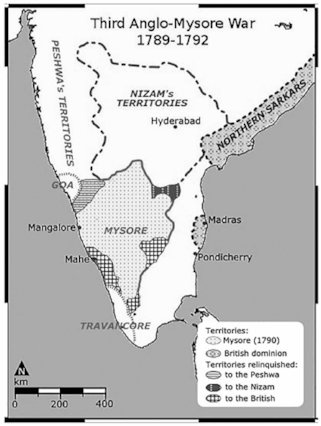
- et al.
- SÉROUGNE, Lucas,
- Translated by JOHNSON, Joan,
https://doi.org/10.3917/ahrf.399.0123
Notes
-
[1]
This work is extracted from Lucas Sérougne, Du Teck pour les Docks – Impérialisme forestier et construction navale en Inde (1793-1815), Master 2 dissertation, under the supervision of Bruno Belhoste and Julien Vincent, Université Paris 1 Panthéon-Sorbonne, June 2018.
-
[2]
Huw V. Bowen, The Business of Empire: The East India Company and Imperial Britain 1756-1833, Cambridge, Cambridge University Press, 2006, p. 49.
-
[3]
Michael Mann, "German Expertise in India? Early Forest Management on the Malabar Coast,1792- 1805", in George Berkemer, Tilman Frasch, Hermann Kulke and Jürgen Lütt (ed.), Explorations in the History of South Asia. Essays in honour of Dietmar Rothermund, New Delhi, Manohar, 2001, p. 12.
-
[4]
Christopher Alan Bayly, Imperial Meridian: The British Empire and the World 1780-1830, London, Longman, 1989, p. 254-255.
-
[5]
François Crouzet, La Guerre économique franco-anglaise au xviiie siècle, Paris, Fayard, 2008, chapter 3.
-
[6]
Jean Meyer, Histoire du sucre, Paris, Desjonquères, 1989, p. 157.
-
[7]
N. A. Dalzell, The Natural History and Biology of the Teak Tree, Bombay, Education Society Press, 1869, p. 1.
-
[8]
For a discussion about the importance of the debates that stirred up France regarding teak and, more broadly, naval construction in India, see chapter 1 of Lucas Serougne, Du Teck pour les Docks, op. cit., p. 22-51.
-
[9]
H. V. Bowen, War and British Society, 1688-1815, Cambridge, Cambridge University Press, 1998, p. 7.
-
[10]
Peter Harrington, Plassey 1757, Clive of India’s Finest Hour, New York, Osprey, 1994, p. 85-86.
-
[11]
Robert Greenhalgh Albion, Forests and Sea Power. The Timber Problem of the Royal Navy 1652-1862, Cambridge, Cambridge Harvard University Press, 1926.
-
[12]
Kenneth Pomeranz, The Great Divergence, China, Europe, and the Making of the Modern World Economy, Princeton, Princeton University Press, 2000, p. 15.
-
[13]
Pomeranz estimated the number of "phantom" hectares of Baltic forest at 261,780 hectares and 404,686 hectares for Canada (Kenneth Pomeranz, The Great Divergence, op. cit., p. 314). It must be noted that not all this timber, unlike teak during the period in question, was used solely for shipbuilding.
-
[14]
For example: Gregory Allen Barton, Empire Forestry and the Origins of Environmentalism, Cambridge, Cambridge University Press, 2002, p. 45.
-
[15]
See, for example: Michael Mann, "German Expertise in India? Early Forest Management on the Malabar Coast, 1792-1805", in Explorations in the History of South Asia, op. cit.
-
[16]
Richard Grove, Green imperialism: Colonial Expansion, Tropical Island Edens and the Origins of Environmentalism, 1600-1860, Cambridge, Cambridge University Press, 1995, p. 3.
-
[17]
See in particular: Madhav Gadgil and Ramachandra Guha, This Fissured Land: An Ecological History of India, Berkeley, University of California Press, 1992.
-
[18]
Fredrik Albritton Jonsson, Enlightenment’s Frontier: The Scottish Enlightenment and the Origins of Environmentalism, New Haven, Yale University Press, 2013, p. 158.
-
[19]
The Eleventh Report of the Commissioners Appointed to Enquire into the State and Condition of the Woods, Forests, and Land Revenues of the Crown, 6 February 1792.
-
[20]
Lambert Andrew, "Empire and Seapower: Shipbuilding by the EIC at Bombay for the Royal Navy 1805-1850", in Philippe Audrère (dir.), Les Flottes des Compagnies des Indes 1600-1857, Vincennes, Service Historique de la Marine, 1996, p. 150.
-
[21]
Louiza Rodrigues, "Ship Building in Bombay: Deforestation of Western India, early Nineteenth Century", Journal of Environmental Research and Development, vol. 6, No. 3A, January-March 2012, p. 931-937.
-
[22]
Partha Chatterjee, The Black Hole of Empire: History of a Global Practice of Power, Princeton, Princeton University Press, 2012, p. 109.
-
[23]
William Dalrymple, White Mughals, Penguin Books, 2004, p. 101.
-
[24]
On the day of the inauguration, Tipu Sultan declared: "Behold my acknowledgement of the standard of your country, which is dear to me, and to which I am allied; it shall always be supported in my country, as it has been in the Republic, my sister!". Partha Chatterjee, The Black Hole of Empire, op. cit, p. 109.
-
[25]
Iradj Amini, Napoleon and Persia: Franco-Persian Relations Under the First Empire, Richmond, Curzon Press, 1999, p. 12.
-
[26]
Ibid.
-
[27]
Daniel Baugh, "Great Britain's “Blue Water” policy, 1698-1815", International History Review, vol. 10, 1988, p. 33-58.
-
[28]
Christopher A. Bayly, Imperial Meridian…, op. cit., p. 3.
-
[29]
British Library (BL), Mellville Papers (Series II) Vol. I, Lord Barham Circ 1788, Add Ms 41,079.
-
[30]
BL, IOR, Additional Ms. 37,275, Wellesley Papers (Series II) vol. II, Dundas to Wellesley, ff. 260-387.
-
[31]
Cited in Fredrik A. Jonsson, Enlightenment’s Frontier…, op. cit., p. 158.
-
[32]
Letter from Lord Melville, in answer to the committee of ship-builders […] in consequence of the EIC being allowed the privilege of importing and exporting goods in Indian built shipping, London, 1797.
-
[33]
Memorial to the Board of Trade from the Ship-Builders in the Port of London on the ruinous consequences which will result from the Employment of Indian built Ships in the Service of the EIC, London, 1809.
-
[34]
BL, IOR, F/4/182/3474. Letter from the Earl of St. Vincent to the chairman and deputy chairman of the EIC: 31 March 1802: on [...] annually building a Ship of Teak wood in India, London, 1802.
-
[35]
Cited in Lambert Andrew, "Empire and Seapower…", op. cit., p. 144.
-
[36]
Very well-known throughout the entire region, shipbuilding on the Malabar Coast had attracted local kings, merchants and Arab and European merchants and princes since ancient times. See in particular: Raja Rao, India’s Contribution to World Thought and Culture, Vivekananda Commemoration Volume (ed. Chandra, L.), Madras, 1970, p. 83-107.
-
[37]
Kaushik Roy, War, Culture and Society in Early Modern South Asia, 1740-1849, London, Routledge, 2011, p. 79.
-
[38]
Michael Mann, "Timber Trade on the Malabar Coast, c. 1780-1840", Environment and History, vol. 7, No. 4, 2011, p. 406.
-
[39]
Pamela Nightingale, Trade and Empire in Western India 1784-1806, Cambridge, Cambridge University Press 1970, p. 84-111.
-
[40]
Michael Mann, "Timber trade…", op. cit., p. 408.
-
[41]
Reports of a Joint Commission from Bengal and Bombay, Appointed to Inspect into the State and Condition of the province of Malabar, in the Years 1792-1793 (Reprint Madras 1862), p. 173, p. 200, 261, 267.
-
[42]
Conrad Wood, "The First Moplah Rebellion against British Rule in Malabar", Modern Asian Studies, vol. 10, No. 4, 1976), p. 543-556, cf. p. 547-548.
-
[43]
In January 1800 for example, a Moplah group set an ambush for the Superintendent of the South Malabar district. Some consider that the conflicts that arose as a result of the change of administration constituted the first uprisings of the British period. See: Conrad Wood, "The first Moplah…", op. cit, p. 551-552; Pamela Nightingale, op. cit., p. 67-69.
-
[44]
BL, IOR, Home Series, Home Misc 210, M. Alex. Mackonochie requires the Courts speedy decision on his plan for the improvement of the Timber Trade in the Province of Malabar, 6 October 1794.
-
[45]
BL, IOR, F/4/89/1843 and F/4/90/1844.
-
[46]
John Brewer, The Sinews of Power: War, Money and the English State 1688-1783, London, Unwin Hyman, 1989, p. 221-249. See also: Kapil Raj, "La construction de l'empire de la géographie. L'odyssée des arpenteurs de Sa Très Gracieuse Majesté, la reine Victoria, en Asie centrale", Annales. Histoire, sciences sociales, vol. 52, No. 5, 1997, p. 1160. See also: Historical Records of the Survey of India, vol. 1-2, 1945.
-
[47]
Richard Wellesley, the brother of Arthur, was Henry Dundas's candidate for the post of Governor General of India. He was appointed in 1798. See Michael Mann, Flottenbau und fordtbetriebb in Indien, 1794-1823, Stuttgart, Franz Steiner verlag, 1996, p. 21.
-
[48]
Marika Vicziany, "Imperialism, botany and statistics in early nineteenth century India: The survey of Francis Buchanan (1762–1829)", Modern Asian Studies, 20, 1986, p. 625–660.
-
[49]
BL, IOR, Marine Subjects, Various, 1785-1814, Memoir By Dr Buchanan relative to Teak Timber.
-
[50]
Marika Vicziany, "Imperialism, botany…", op. cit., p. 633.
-
[51]
Michael Mann, "German Expertise in India? Early Forest Management on the Malabar Coast, 1792-1805", in Explorations in the History of South Asia, op. cit., p. 18.
-
[52]
BL, IOR, Board’s Collections, F/4/182/3474.
-
[53]
BL, IOR, Home Misc. Series 341, Governor Jon. Duncan to Lord Melville, introducing Baron de Wrede, Bombay 17th April 1805.
-
[54]
Ibid, p. 67. "Terra Incognita […] remains still a reprehensible blank on our maps".
-
[55]
BL, IOR, F/4/220/4817 p. 73. Underlined in the document.
-
[56]
Michael Mann, "German Expertise in India?...", op. cit., p. 23.
-
[57]
BL, IOR, F/4/182/3474, Extract of Bombay Public Consultations, 23 March 1805.
-
[58]
Ibid, Draft of instructions to be issued to the Committee of Survey.
-
[59]
Christopher A. Bayly, Imperial Meridian…, op. cit., p. 139.
-
[60]
BL, IOR, Home series misc 210, p. 102-104.
-
[61]
Ibid, p. 105.
-
[62]
BL, IOR, Marine Subjects Various 1785-1814, Buchanan on teak timber, p. 1.
-
[63]
BL, IOR Francis BUCHANAN, A journey …, op. cit., vol. 3, p. 187-188.
-
[64]
BL, IOR, F/4/192/4316, p. 93.
-
[65]
BL, IOR, F/4/220/4817, p. 137.
-
[66]
BL, IOR, F/4/192/4316, p. 135.
-
[67]
Jacques Pouchepadass, "Colonisations et environnement, Colonisation et changement écologique en Inde du Sud, La politique forestière britannique et ses conséquences sociales dans les ghats occidentaux (19e-20e)", Société française d'histoire d'outre-mer, 1993, p. 5-22.
-
[68]
Mackonochie died from disease in the jungle and Atkins returned to England, completely exhausted.
-
[69]
BL, IOR, F/4/220/4817, p. 454.
-
[70]
Edward Percy Stebbing, The Forests of India, vol. 1, 1922, p. 63. See: Reports of a Joint Commission for Bengal and Bombay, Appointed to Inspect into the State and Condition of the province of Malabar, in the Years 1792-1793, reprint, Madras, 1862.
-
[71]
Teak was used for a variety of purposes: timber for building, medicinal potions made from the boughs, fertilizer made from the leaves and branches. Considered sacred by certain branches of Vishnuism, it could be used to collect the souls of the dead. There are some mentions of the use of teak in certain Buddhist rituals. See: Jacques Pouchepadass, "Colonisations et environnement", op. cit.
-
[72]
BL, IOR, F/4/220/4817 p. 481-483.
-
[73]
Edward P. Stebbing, Forests of India…, op. cit., p. 64.
-
[74]
Ibid; R. Grove, Green Imperialism…, op. cit., p. 396.
-
[75]
BL, IOR, F/4/220/4817, p. 389.
-
[76]
"ascertaining of the existence, quantity and size of teak timber an object which you will constantly bear in mind to be the primary one to which you are to direct your attention."
-
[77]
The colonists needed to rely on native collaborators. The surveys were the areas where this collaboration met with most success and they participated in the creation of a pro-British local elite. See Kapil Raj, La Construction de l’empire de la géographie..., op. cit., p. 1165. However, it was not only the collaboration of an elite that was needed but also that of less well-off workers: they were essential for translating, writing in local languages, guiding, and of course, carrying, clearing the ground, providing information and, quite often, care.
-
[78]
Edward P. Stebbing, Forests of India…, op. cit., p. 70.
-
[79]
BL, IOR, F/4/247/8155 p. 25.
-
[80]
Edward P. Stebbing, Forests of India…, op. cit., p. 69.
-
[81]
BL, IOR, L/E/5 Vol. 82 – Report on the state of the Forests of Teaks in Malabar written by William Taylor Money.
-
[82]
See, for example: the introduction by Richard Grove, Ecology, Climate and Empire: Indian Legacy in Global Environmental History, New Delhi, Oxford University Press, 1998; Richard Grove, "Conserving Eden: the EIC and their environmental Policies on St Helena, Mauritius and in Western India, 1660 to 1854", Comparative studies in Society and History, vol. 35, No. 2., 1993, p. 351; Gregory A. Barton, Empire Forestry…, op. cit., p. 45.
-
[83]
Richard Grove, Green Imperialism…, op. cit., p. 457; Gregory A. Barton, Empire Forestry…, op. cit., p. 47.
-
[84]
Famines affected India in the 1770s mainly due to the catastrophic management of the EIC and the corruption that prevailed within it.
-
[85]
BL, IOR, Home/Misc/799/294, Extract of Bengal Public Consultations the 12th March 1787, Fort William 2nd July 1790, p. 55.
-
[86]
Deepak Kumar, "The Evolution of Colonial Science in India: Natural History and the EIC", in John M. MacKenzie (ed.), Imperialism and the Natural World, Manchester, Manchester University Press, 1990, p. 52.
-
[87]
BL, IOR, Bengal Public Council – 2nd June to 30th July 1790.
-
[88]
BL, IOR, Board’s Collections, F/4/99/2028, William Roxburgh to H. T. Darell Esq., dated 6 November 1799, p. 5.
-
[89]
Ibid, T. Barnett to G.H. Barlow Esq., dated 8 November 1799, p. 2.
-
[90]
See: BL, IOR, F/4/99/2028; F/4/465; F/4/501/1692.
-
[91]
For example that of Leake, in the Jungle Mahals in 1814. See BL, IOR, F/4/501/11992.
-
[92]
BL, IOR, F. Buchanan, A journey (…) vol. 3, p. 287.
-
[93]
BL, IOR, Marine Subjects, Various, 1785-1814, Memoir by Dr Buchanan relative to Teak Timber, p. 4-5.
-
[94]
BL, IOR, F/4/347/8155 p. 3.
-
[95]
BL, IOR, F/4/347/8155 p. 7: "the Government of this presidency may at all times possess the most accurate Informations of the number of teak trees grown and growing within the whole extent of the forests of Malabar".
-
[96]
Ibid, p. 63.
-
[97]
M. Mann, "Timber Trade on the Malabar Coast, c. 1780–1840.", op. cit, p. 403-425.
-
[98]
Ranajit Guha, A Rule of Property for Bengal; An Essay on the Idea of Permanent Settlement, Paris, Mouton, 1963.
-
[99]
Faisal Chaudhry, "A Rule of Proprietary Right for British India: From Revenue Settlement to Tenant Right in the Age of Classical Legal Thought", Modern Asian Studies, vol. 50, No. 1, January 2016, p. 352.
-
[100]
Gildas Salmon, "Les paradoxes de la supervision: le "règne du droit" à l’épreuve de la situation coloniale dans l’Inde britannique, 1772-1781", Politix, vol. 123, No. 3, 2018, p. 45.
-
[101]
This region was chosen because accounts from the local populations told Bell that the forest there had previously been abundant in teak : "it being the universal opinion in the natives of Malabar that when teak is not indigenous, it will not thrive". BL, IOR, F/4/347/8155, p. 66.
-
[102]
BL, IOR, F/4/347/8155 p. 62.
-
[103]
BL, IOR, F/4/99/2028, William Roxburgh to H. T. Darell Esq., letter dated 6 November 1799, p. 8.
-
[104]
Gildas Salmon, "Les paradoxes de la supervision", art. cit, p. 35.
-
[105]
We can undoubtedly question the statement according to which Roxburgh's convictions were at play in his wish to spread teak wood. See what Grove has to say in chapters 7 and 8 of: Richard Grove, Green Imperialism, op. cit.
-
[106]
BL, IOR, F/4/99/2028 p. 13, Directions for rearing Teak Plants from the Seed.
-
[107]
William Roxburgh, "Some Account of the Teak tree of the East Indies", Journal of Natural Philosophy, Chemistry and the Arts, 1812, p. 349.
-
[108]
BL, IOR, F/4/348/8156 p. 55.
-
[109]
BL, IOR, F/4/347/8155 p. 193.
-
[110]
See for example the Nilambur plantation founded by Lieutenant Connelly in 1844. Brett Bennett, "The origins of timber plantations in India", Agricultural History Review, vol. 62, 2014-1, p. 98-118.
-
[111]
It also bought some from the EIC after verifying their quality.
-
[112]
R.W, Wadia, The Bombay Dockyard and the Wadia master builders, The Bombay Dockyard and the Wadia Master Builder, Bombay, Godrej Memorial Printing Press, 1957.
-
[113]
Approximately 335 ships in 1810 of which 135. It is difficult to find reliable figures about the number of Royal Navy ships. Here we have used a figure extracted from: https://www.historic-uk.com/Blog/British-Navy-Size-Over-Time/.
-
[114]
Fredrik A. Jonsson, op. cit., p. 158.
-
[115]
Brian Lavery, The Ship of the Line - Volume 1: The development of the battle fleet 1650-1850, Conway Maritime Press, 2003, p. 189.
-
[116]
BL, IOR, F/4/220/4817 p. 71-72. Also BL, IOR, F/4/192/4316 p. 40.
-
[117]
Edward Palmer Thompson, Whigs and Hunters: The Origin of the Black Act, London, Allen Lane, 1975.
-
[118]
Jean-Baptiste Fressoz, Frédéric Graber, Fabien Locher, Gregory Quenet, Introduction à l’histoire environnementale, Paris, La Découverte, 2014, p. 96.
-
[119]
R. M Martin, History of the Colonies of the British Empire in the West Indies, South America, North America, Asia..., London, W. H. Allen & Co. and George Routledge, 1843, Appendix 4, p. 144.
-
[120]
Jean Baptiste Fonssagrives, Traité d’hygiène navale, deuxième édition, JB Baillière et fils, Paris, 1877, p. 5; Ressources végétales de l’Afrique tropicale, Bois d’œuvre 1, Leyde, Backhuys Publishers, 2008, p. 614.
-
[121]
Vaclav Smil, Biomass Energies – Resources, Links, Constraints, New York, Plenum Press, 1983, p. 36.
-
[122]
Kenneth Pomeranz, The Great Divergence, China, Europe, and the Making of the Modern World Economy, Princeton, Princeton University Press, 2000, p. 314.
-
[123]
S. B Karmacharya et K.P. Singh, "Biomass and net production of teak plantations in a dry tropical region in India", Forest Ecology and Management, Volume 55, December 1992.
-
[124]
A collection of Papers relative to Ship building in India, Calcutta, 1840, p. 164-165.
-
[125]
« Estimate of the expence of building a Ship of 830 and 1000 tons », Minutes of the Evidence taken befor a Select Committee, p. 101.
-
[126]
BL, IOR, F/4/220/4817, p. 427.
-
[127]
Minutes of the Evidence taken before the select Committee, p. 98.
-
[128]
We can take away 1/3 of the result for Calcutta, assuming that only 2/3 of the timber for construction was imported from Malabar.
1 In early autumn 1796, ships arrived at the quays of the port of London (Appendix 1), their holds filled with rice. Since summer 1795, England had been suffering from severe food shortages; at war with France since 1793, it had ordered the Court of Directors of the East India Company (EIC) to send 27 ships filled with foodstuffs from its Indian possessions [2]. The largest EIC ships were requisitioned to take part in the war effort [3]. The one thing that they had in common: they were all built from teak, a rot-resistant wood endemic to India.
2 Far from taking place in a restricted geographical area, the wars waged between France and England between 1793 and 1815 called for massive contributions from the Empires; more than mere territories allowing the growth of new markets, the colonies were places to which the wars were exported [4]. We know about the issue of sugar during the Anglo-French wars in the Caribbean [5]: French fears of losing the West Indian sugar colonies, for example, formed part of the motivation for the Egypt campaign [6]. Resources were now considered on the scale of the Empires. The example of the Indian forests, and in particular of teak wood, highlighted the importance of the environmental foundations of the Anglo-French wars during the Revolution and Empire.
3 Today, teak wood is sought after above all for making wooden floors or furniture. However, in the 18th and 19th centuries, Tectona Grandis (Appendix 2), then considered to be "the most valuable of all Indian trees" [7], was massively used as timber for construction. The naval industry was particularly fond of it because teak had a reputation for being rot-resistant, of withstanding tropical climates and, due to its oily qualities, of protecting iron against corrosion.
4 During the wars between France and England, teak was also at the heart of a political, economic, commercial and scientific debate. This variety of wood became a stake in a struggle from which the entire British Empire was positioned [8]. The Battle of Plassey in 1757 – in the course of the "first world war" [9] – which ratified British colonial domination in Bengal [10], was a marker of the intensification of the British hold over Indian environments. From this date, the British obsession with control over Indian timber was to escalate. The loss of America merely served to reinforce this feeling; gradually, England was immersed in a phase of State predation on the forests of India. It wished to relieve the pressure brought to bear on its own oak forests and to release itself from dependence on timber resources from territories that did not belong to it, particularly the Baltic countries [11]. The blockades organized by Europe in the early 19th century, which cut off England's usual supply channels (the Baltic and Russia), forced it to turn a little more towards India and its teak. At the turn of the 19th century, England partly relied on this variety to relieve a territory under Malthusian and ecological pressure [12]. To do this, it needed India's hectares of forests.
5 It can be estimated that the quantity of Indian land put into service for the British war effort through the use of teak (the "phantom hectares", to use the terminology of Pomeranz) was around 400,000 hectares of forest during the period from 1793 to 1815, i.e. just over 20,000 hectares per year (Appendix 3). This may seem very little compared to the wood imported from the Baltic and Canada [13]. However, thanks to this mere trifle, the English Crown was able to ensure its control of the whole of Asia. In fact, the timber from the forests, the shipyards and regional expertise allowed England to maintain a very large navy, at a reduced cost, all over the Indian Ocean. Furthermore, while Britain was subject to continental blockades – which seriously restricted the supply of timber – and the fear of the oak forests being depleted was increasing, the possibility of having timber available from India represented a relief that is difficult to quantify.
6 Although evoking state interests related to the wars against France, the historiography has held that the British administration of the Indian forests, which was rolled out there in the early 19th century, marked the foundations of the first policies on forest conservation to have a positive impact [14]. It is true that scientists contributed greatly to the introduction into India of European forest conservation techniques [15]; they played a driving role in establishing genuine forestry systems. However, it was not only climatic, humanitarian and ecological considerations from the European scientific community that motivated environmental protection policies in India [16], but indeed the global context of the wars against France that drove England, through the EIC, to take measures to protect a key military resource for shipbuilding: teak. Thus, the context of the wars against France marked a time of a "teak rush", which saw the officers of the EIC do everything that they could to obtain and secure the precious wood. It was a case here of showing the central role that the forests of India played in consolidating the British Empire's domination of the seas. As other authors have already done [17] – concentrating on later periods, however – it will also be a case of questioning the idea that the birth of a forestry administration in India came about for environmental reasons in a context of scientific and enlightened management of resources. There are two stories that can be told through the prism of teak: the story of the wars against France, together with that of the conquest of the Indian forests.
1. Henry Dundas: the forests of India in the service of the Navy
7 Behind the arrival of the first ships of teak in London in 1796 was Henry Dundas, the closest adviser of Prime Minister William Pitt. In his position as Secretary of State for War, which Pitt created especially for him and which he occupied between 1794 and 1801, Dundas played a key role in the wars against France. From 1793, he was also Chairman of the Board of Control – the body responsible for supervising and controlling the Court of Directors of the EIC after it was accused, in 1784, of corruption and misappropriation. Henry Dundas operated in two scenarios: on the one hand, he was immersed at the heart of the wars against France and, on the other, he occupied a leading position in Indian policies. For this essential figure in late 18th century British politics, the wars against France were to be won at sea and in the colonies [18].
8 From 1793, England was caught up in the maelstrom of the revolutionary wars with France. Just before the start of these wars, a report ordered by the controller of the Royal Navy, Charles Middleton, concluded that the Kingdom could no longer depend on its own oak trees and would soon become "dependent on other powers for its supplies of timber" [19]. This was a thunderclap. The supply of timber to the King's Docks in London was a matter for concern and while France was in a position to rely on the regional resources of the continent, England, which made the choice at the time of concentrating on its navy, began to look towards its overseas territories for a supply of timber for construction.
9 Rather than obtaining supplies, the whole of England, embodied in the person of Dundas, wanted its navy to be able to directly build part of its fleet in India. The threat posed by France and Holland (allied with France) to trading interests and to British domination in the Indian Ocean precipitated this decision [20]. The rise of Bonaparte drove England to have warships built there to protect its possessions [21]. The latter cast his shadow as far as Asia: he had made an alliance with Tipu Sultan, England's enemy on the Malabar Coast, who had sworn that the British colonists would be defeated. In 1794, he declared himself "citizen Tipu" and created a "Jacobin club" in Seringapatam [22]. On the day of the inauguration of this revolutionary group – which was going to serve for "framing laws comfortable with the laws of the Republic" [23] – Tipu Sultan planted a "Liberty tree". Was it a teak tree? Whatever it was, by declaring his friendship [24] for the Republic, Tipu Sultan wanted Bonaparte to come and free India from the presence of their common enemy. Bonaparte, meanwhile, wished: "as soon as he has conquered Egypt, [to establish] relations with the Indian Princes and, with them, to attack the English in their possessions" [25]. Talleyrand himself, Minister of Foreign Affairs, proposed in February 1798 sending 15,000 men "from Suez to India" to help the sovereign in his fight against the English [26]. The fall of Tipu Sultan in May 1799, after the battle of Seringapatam, reinforced and consolidated English domination over the forests and territories of the Malabar Coast. England was victorious and the French threat that had been hanging over these territories was definitively removed. The Republican enclave was no more.
10 From 1799, the Malabar Coast was held by the British. It now became possible to implement Henry Dundas's plan: to use Indian teak to build ships for the Royal Navy. This programme was part of a more general policy, which D. Baugh called the "blue water policy" [27]. England was aware that it could no longer rival the military force of the continent, that is to say France and its allies; it therefore made the choice of not playing on the same court and of opposing this territorial land force with a naval power and a capacity for supply of resources from its overseas possessions [28].
11 Henry Dundas played an important – although little studied – role in the use of teak in India. After the late 1780s [29], he was convinced about the need to make use of the "almost inexhaustible" forests [30] of India to satisfy the Navy's need for wood. His opinion was partly based on the judgement of James Rennel, the famous geographer who, in his reports, had complained about "the unpardonable negligence of which we are guilty by delaying the building of Warships in Teak for the Indian seas" [31].
12 The arrival of the teak ships in the port of London in 1796 was a victory for Dundas. For many, however, it represented a threat: the private interests of London shipbuilding seemed to be in danger. Despite the numerous protests, the promises made [32], and in spite of the "tumultuous gatherings" formed by "industrious people" at the London docks [33], on the eve of the signature of the Treaty of Amiens in 1802, the Navy ordered the construction every year in Bombay of a ship-of-the-line and a frigate [34], which "would be of great importance for supporting the naval force of the Empire" [35]. For the first time in its history, the Royal Navy relocated part of the construction of its fleet. After numerous debates, the port of Bombay was chosen to house the shipyards. Dundas had cause for celebration. He was the genuine architect of the policy of the Indian Administration and his work was finally bearing fruit. He now became indispensable to ensure the effective presence of teak trees in sufficient quantity and for understanding how the trade in this variety was organized there.
2. Controlling and knowing
2.1. Organizing trade: the teak market on the Malabar Coast
13 We should remember that a timber market was soundly in place and structured before British domination of the forests of southern India [36]. State control of the forests seems to have already existed before the arrival of the British; in the royal forest regions, this tree could only be cut down when the sovereign gave the order for it [37]. From the times of Tipu, in the forests of the Sultanate of Mysore, the timber market was organized into two separate groups, which the British called "Jungle Merchants" and "Coastal Merchants" [38]. The first group was mainly made up of Mappilas, a Muslim community from Kerala that exercised a kind of monopoly in the Western Ghats [39]. They organized the first two stages of supplying timber: finding workers to cut down the trees and then organizing the transport of the logs. Transport to the rivers was carried out with the help of elephants or buffaloes (Figure 3); the loads then floated down to the coast harnessed together with bamboo [40].
14 Once they had arrived on the coast, the cargoes of timber were taken over by the "Coastal Merchants". They bought them and sent them to the warehouses of the ports that housed the shipyards. After keeping it in these depots for two years to dry out, the Coastal Merchants then loaded the timber onto coastal vessels and sent it to the naval shipbuilders at the Bombay docks, who had already negotiated the purchase price.
15 When England overthrew Tipu in 1799, it was not easy to insert itself into a local trade that was already firmly established [41]. The British, who tended to favour the Hindus (Tipu Sultan was a Muslim and they were often considered to be enemies of civilization), caused anxiety among the jungle merchants. With little enthusiasm for the idea of an ancient Hindu aristocracy once again being established [42], their hostility sometimes took the form of armed conflicts [43]. Bombay's need for timber for construction nonetheless continued to grow; the colonial administration fervently wished to establish its own timber market, freed if possible from the existing structures.
16 This is what Alexander Mackonochie attempted to do on his arrival in India in 1796, when part of the Malabar region had just been annexed (Figure 4). This young entrepreneur borrowed money from the Court of Directors to set up a sawmill in Beypur, a few kilometres from Calicut. The aim was to galvanize all the trade in this region in which the forests were reputed to be abundant in the best quality teak [44]. This sawmill turned out to be a financial disaster and the project collapsed in 1799; the private investors were ruined and the Court of Directors, which extricated itself, took Mackonochie to court to get him to pay back part of the sums invested [45]. The Moplah rebellions and the failure of this sawmill are a good illustration of the inability of the British to do away with the local structures. The exploitation of teak was more difficult than expected; the colonists suffered from the lack of information available about these territories. To be in control, it was becoming more necessary than ever to have knowledge, starting with the resources available.
2.2. Governing by survey
17 A policy of domination by weapons was now superseded by a policy of control by information [46]. While several departments were created – Marine Survey, Botanical Survey, Topographical Survey, Geological Survey, Meteorological Survey, etc. – the forests of India were among the privileged places of this "gentle" power. The Indian jungles, which conveyed a number of phantoms, were to become forests, known and controlled. This metamorphosis was to be brought about by the tenacious efforts of intrepid officers. It was also necessary to ensure the cooperation of the local elite, particularly the main merchants and the local kinglets. In India, as in the home country, the "blue books" now became instruments of governance.
18 Barely a few months after the final defeat of Tipu Sultan at Seringapatam, in 1799, Francis Buchanan was commissioned by Wellesley [47], in close collaboration with Dundas in the home country, to conduct a survey of the Malabar and Canara regions in the province of Mysore (Figure 5) [48]. In a report, ordered by the Court of Directors and written following the survey, Buchanan stated that Mysore used to be covered with immense teak forests but that "the negligence of the natives has destroyed them" [49]. This argument was part of a more general discourse of legitimation of the wars against Tipu's authority, the huge costs of which had to be justified to the home country. In addition to being an enemy of England, Tipu also became a fearsome despot and a great destroyer of the environment [50]. Considering Tipu as the destroyer of the teak forests also made it possible to legitimize the introduction of a "scientific and enlightened" management of the forests. Thus, at the end of his report, Buchanan recommended that the EIC should itself manage the teak trees growing on its territory and said that they were no longer found there in abundance: it was a question of taking appropriate measures. The Court of Directors, which was very impressed with this report, had it printed and widely distributed.
2.3. The gentleman from Germany
19 While doubt was spreading as to the actual quantity of teak wood available in the forests of southern India, orders for the construction of a ship-of-the-line and a frigate came from London in 1802. Despite numerous requests, for three years, nothing specific was undertaken to find out more about the teak resources of the Malabar forests [51]. In 1805, a "gentleman from Germany" living on the Malabar Coast for more than 10 years, Baron Francis von Wrede, published a report that caused a sensation [52]. This report of around fifty pages received a resounding response within the Indian colonial administration and in the home country. Wrede, strongly supported by the Governor of Bombay, Jonathan Duncan, was introduced to Henry Dundas to explain his opinions about the Indian forests [53]. His report soon became a reference document and guided British policies on the Indian forests.
20 In this report, the author first all stated the lack of knowledge of the British. The forests of India were still "terra Incognita [...] blank on our maps" and "the Teak timber remains till now a kind of hidden treasure tor us" [54]. For Wrede, the management of the forests of the Malabar Coast should follow the example of the European forests. Only wooded areas producing "useful" resources should be preserved. Laws would be adopted to "protect" the teak trees from any unregulated felling and an efficient administration would oversee this. A "forest authority" would also be set up to take care of the management of the forests and the timber trade in the region. Headed by an "inspector of forests", this new administration would be responsible for selecting, felling and transporting the teak trees removed. Access to the forests by local populations would be restricted in order to protect against uncontrolled felling of the teak trees. There would also be the question of clarifying property rights in these forests. Because according to Wrede, all territories that were not claimed by one group or another, in addition to the territories that had belonged to Tipu Sultan, "belong incontestably to the Company" [55].
21 Wrede was attempting to transplant the entire German forestry system onto the Malabar Coast. He wanted to place the forests and their resources under the central control of the State where the foresters would supervise felling and would control access to the forests. The head forester would have to take on a policing role for this purpose: punishing any infringement of the regulations in force and sending regular reports to the central administration. While in Germany and Europe the oak remained at the heart of forest management, in India, it was teak on which all attention would be concentrated. It was now a case, according to the thinking that was on the ascendant in Europe, of no longer seeing forests as magical spaces, hostile or welcoming, but as spaces filled with resources, the output of which had to be maximized – "turns woodlands into valuable forests" [56]. Teak became the product of the forest that was most economically useful. The colonial ideal of the Indian forest therefore took the form of a gigantic plantation, regulated, with restricted access, having as its main objective, in the context of the French Wars, providing for the colossal needs of the Royal Navy that was becoming established in Bombay.
22 From March 1805, "Major Atkins, from the Corps of Engineers" and "Mr Mackonochie" were commissioned with conducting a survey in the forests of the provinces of Malabar and Canara [57] (Figure 6). On 2 April 1805, they were sent their instructions [58]. For around ten years, the surveyors travelled the routes that Wellesley had had constructed in the forest regions of the provinces of the Malabar Coast [59] (Figure 7). In 1805, Johnson undertook an expedition in the province of Canara, to the north of Malabar [60]. In 1806, Alex Walker, the Resident of Baroda, sent Mootiram to conduct a survey further north in the forests of Gujarat. In 1807-1808, and then again in 1810, Captain Thatcher travelled through Gujarat searching for sources of supply for Bombay [61].
2.4. Imposing the rule of law
23 In summer 1805, Atkins and Mackonochie were therefore in Calicut. Although teak had to remain the authentic common thread of their survey, the mission was also for the purpose of studying the geography, climate and populations of the province of Malabar, and particularly the property rights existing in the region. What we know about the Malabar forests at this time can be summarized thus: on the one hand there were the "public forests" considered to be inhabited, where Tipu Sultan had exercised his authority, and which were considered from 1799 to belong "incontestably" to the Company; on the other hand there were the forests that did not belong to the Company [62]. In his survey, Buchanan estimated that these forests were "the property of the Gods of the village": "the trees ought not to be cut without having obtained leave from the Gauda, or head man of the village, whose office is hereditary, and who also is a priest (Pùjàri) […]. This seems, therefore, merely a contrivance to prevent the government from claiming the property" [63]. After months of searches, Mackonochie and Atkins were heading in the same direction: "it does not appear that the records throw much light on this intricate subject", they wrote [64]. Mackonochie then began to draft a questionnaire, which he intended to distribute to the local populations.
24 All those who "claim" to have rights over the forests or over the woodland resources had six months to send proof of ownership to the Committee of Survey, in writing if possible [65]. After this period, those who had not submitted them would have their claims definitively rejected. The questions asked by Mackonochie bear witness to the difficulty that the British had in understanding the property system in place:
"Do you possess or claim to possess any […] lands on which Teak Timber is produced? Did you acquire these Lands by inheritance, By purchase or otherwise? Have you any deeds by which you can show your title to the said lands? Be so good as produce them? What powers do you possess over these Lands? Can you sell them to anyone?" [66].
26 The aim of the questionnaire was to appropriate, legally, forest territories that were inhabited, or at least being exploited, but of which no one was able to prove ownership. It was a question of constituting public forest areas, by declaring as property of the State all woodland areas without proven owners and excluding from them the groups that had so far been earning a living from them [67].
3. The Company monopoly
3.1. Towards a forestry management policy
27 In 1806, at the end of an exhausting and incomplete survey [68], Atkins and Mackonochie came to the conclusion that it would be difficult to prevent the "native axe" from devastating the Teak trees of the jungles [69]. The British became aware that they did not have the means to apply the measures for protecting the teak trees that already existed.
28 In 1800, the second Bengal-Bombay Joint Commission had passed a regulation prohibiting the felling of teak trees with a circumference of less than 21 inches [70]. However, the text remained without effect. Apart from the traditional uses that were still ongoing [71], the news that the Royal Navy was now to build ships made from teak in Bombay soon led to a genuine rush on the precious tree, leading the timber merchants to cut them down as fast as they could. It was then a question for the British of finding the means to control the resource.
29 At the end of 1806, a post was specially created to solve the problem of the destruction of the jungles of the Malabar Coast: Captain Watson, who had succeeded Atkins as head of the Committee of Survey [72], became the first Conservator of Forests [73]. This event, which represented the first milestone in this period traditionally associated with the EIC monopoly [74], took place in a more general context of concern about teak: after the crushing failure of the Atkins-Mackonochie expedition, the Court of Directors was worried about not seeing the money invested bear fruit. Little more was known about teak resources and, in London, Dundas and His Majesty's ministers were growing impatient. It was a question of relaunching the Committee of Survey project of Atkins and Mackonochie. Watson seemed to be the man for the job: he "possesses a perfect knowledge of the language and of the country" [75], and the "considerable influence" that he exercised in the region made it possible to "preserve tranquillity and order among the Inhabitants south of Beypoor, while rebellion raged in every other part of the Province". His mission was specified in November 1806. He was to "prevent the devastation of the woodlands for construction", "ascertaining of the existence, quantity and size of teak timber" [76]. To achieve this, Watson could negotiate contracts with the timber merchants on the Malabar Coast, which would enable him to ship large quantities of teak, of sufficient quality for building warships, to the Bombay shipyards. His jurisdiction extended no further than where the teak grew: the forests of the Malabar Coast. To assist him in this task, in December Watson appointed "native agents" [77].
30 In January 1807, all the forests of Malabar, Canara and Travancore came under the control of the EIC, with the Conservator of forests at the centre. In April the same year, a proclamation announced that all teak was now the exclusive property of the EIC and that any felling of these trees, without a licence issued by the Conservator, would be punished [78]. It became necessary to be approved by the Conservator if one wished to engage in the timber trade. This was the birth of the first colonial administration of forests in India. Its role was first and foremost to protect a resource that all of England desired. Teak became "the most important national purpose, both in respect to His Majesty's Navy and the general supply of that article so essential to a maritime Nation" [79]; a genuinely "royal" tree [80].
31 While it seemed more certain that the forests of India contained large quantities of this tree [81], the question arose as to the durability of the exploitation of teak. The British were well aware that the forests were currently being decimated. Contrary to what was written by certain authors, the first measures for protection of the forests were not taken by States which, threatened by ecological changes, had been forced to accept the environmental prescription of pioneering scientists attempting to save weakened ecosystems [82]. Far removed from climatic or meteorological preoccupations, the colonists wanted to take measures to protect the forests to guarantee a sustainable supply of teak for shipbuilding. Policies for replanting deforested areas were therefore introduced by the Conservator of forests. While the historiography has held that the first genuine attempts to introduce teak plantations came about in the 1840s with that of Henry Connolly in Nilambur [83], the wish to transform certain parts of the Indian forest into teak plantations already existed.
3.2. From jungle to garden, from garden to plantation : civilizing the forests
32 While the original purpose of the Calcutta Garden was to rationalize farming production and prevent famine [84], it rapidly became a place where teak took root. In March 1787, William Kyd, founder of the Botanical Garden, was aiming to obtain some teak seeds from the Malabar and Coromandel regions to be able to cultivate it; teak seeds were therefore shipped to the Botanical Garden [85] which became a "garden for acclimatization" of teak wood [86]. In 1790, the young teak plants were "growing vigorously" and had just come into flower [87]. When Scotsman William Roxburgh took over as head of the Calcutta Botanical Garden in 1793, he worked even harder than his predecessor to promote teak.
33 Trained in medicine at Edinburgh College and having settled in Madras in 1776, Roxburgh began, on taking up his post at the Calcutta Garden in 1793, an enterprise of distribution of teak seeds and young seedlings, which were transplanted to the growing network of botanical gardens [88]. These gardens became conservatories of seeds and hothouses for teak. From 1795, Roxburgh estimated that in addition to the gardens, teak should be grown in plantations specially dedicated for this purpose. He therefore sent young seedlings to Rampore Bauleah, and in 1799, a wood of "the hardest of materials" prospered there [89]. The purpose of this plantation was to free Calcutta from being supplied by Rangoon where the French still exercised some influence [90]. This is the first mention in the sources of a vast area especially dedicated to growing teak as was being done for example for cotton and sugar. All the teak plantations that were created after that of Bauleah used it as a model [91]. William Roxburgh thus found himself, at the turn of the 19th century, at the centre of a botanical network for the distribution of teak all over India, comfortably installed in the hothouse that was the Calcutta Botanical Garden.
34 As early as 1799, Buchanan wished to "eradicate the trees of lesser value" in order to be in a position to "procure a considerable quantity of teak in a well regulated government" [92]. He had also proposed developing teak plantations in the Malabar and Canara regions [93]. From 1809, the role of the Conservator changed. He no longer only had to take measures to protect the trees, punish offenders, negotiate contracts with merchants and issue licences authorizing participation in the timber trade, he now also had the task of replanting certain areas of forest. It was the entire "future productivity" of the forests that was at stake and, especially, the support that they could offer "to the Naval and Commercial interests of the British Empire" [94]. In July every year, the Conservator had to send a report to the Forest Committee in Bombay, describing the progress of this enterprise of replanting teak, the number of seeds and seedlings planted [95].
35 In 1809, Alexander Bell, Resident in Baroda, was appointed to replace Watson, who was constrained to leave Malabar on health grounds [96]. The new Conservator decided to devote himself completely to this task. He therefore had to choose how to run the operations. Should it be the responsibility of the EIC to provide the seeds and to pay people to sow them between November and May, in short, for the Conservator to be in charge for supervising operations? Or should the care of them rather be left to the "late Forest Proprietors", which would have the dual advantage of saving the EIC money and satisfying "every public and private feeling"? This latter remark clearly shows us the internal conflict experienced by the colonial administrators of India.
36 The "late Forest Proprietors" were those from whom Watson had removed, in April 1807, the right to claim ownership of the forests on the Malabar Coast. They were the dominant classes of the populations that lived in the southern regions of India. Quite often, these populations were not proprietors in the sense prevailing in Europe at the time, but rather groups that had been granted the privilege of felling trees by a Rajah, for example that of Nilambur [97], or even individuals whose membership of a caste designated them as the "beneficiaries" of certain territories.
37 The British had great difficulty in understanding the property systems existing in the Indian territories [98], all the more so because they varied from one region to another. Watson's decision to strip the Indian "proprietors" of ownership of the forests was also problematic. In fact, the British considered on the one hand that "the Freedom of property is absolute!" [99] and that private property was the "foundation of the social order and economic progress" [100]. On the other hand, the reforms being carried out by the Conservator of forests tended to deny the right to property and the use of the forests to those who claimed possession of them. To attempt to resolve this conflict, Alexander Bell brought together the 17 late proprietors of the forest region of Velatree [101] with an order to "direct & stimulate them […] in their […] characters as public servants to prosecute the duty of replanting" [102]. The objective stated was to get the "late proprietors" to accept the loss of rights over their land and, according to William Roxburgh, for "the native landowners to be persuaded to think that their interests and their wealth will thus be favoured" [103].
38 The internal conflicts experienced by the colonists denote a lot of trial and error regarding the strategies implemented by the British to impose the rule of law in India [104]. The colonial power became aware that it could not manage India's resources without managing its society. The EIC gradually realized that to govern India, it had to understand its laws and its society. This was one of the principal roles of the Asiatic Society of 1784, and Fort William College founded in 1800, to study Indian customary law: to exploit teak, they had to understand the system organized around it, whether social or legal.
39 A contract was therefore entered into between the Conservator and the proprietors: they had to plant 7,000 trees each year. In return, they would receive a salary – depending on the number of trees that had grown – and would retain the right to remain on their land. However, Bell did not allow them the responsibility of planting teak as they understood it and took it upon himself to distribute among the "proprietors" a manual on growing teak written by Roxburgh [105]. These instructions were to be used to standardize and rationalize cultivation methods to obtain the best cost/performance ratio. Roxburgh discussed in detail the periods best suited for growing teak, "the most useful tree in the world" [106]. For him, such instructions were necessary because he had "often seen seeds from the same tree succeed with one person but completely fail with another" [107].
40 He showed himself to be extremely attentive to botany and to the specific conditions of cultivation. We learn there for example that the teak "nut", which is particularly hard, contains four "cells", in each of which lies a "small seed". Roxburgh stated that, although the seed retains its "growing power" for at least 18 months, it is advisable to plant it just after the start of the first rains. Each of the "nuts" produces from 1 to 4 plants, after between 4 and 8 weeks: "the plants when they first make their appearance are very small, scarce so large as a Cabbage plant when it first appears above ground, their growth however is rapid". This is one of the main advantages of teak wood, the growth of which is spectacular, particularly for those familiar with the speed at which the oak tree grows in England. When the plant has reached around 5 cm (2 inches) in height, great care must be taken to lift it from the soil and replant the roots approximately 15 cm (6 inches) apart until the next rains. Roxburgh's techniques must have been effective because in June 1811, Alexander Bell wrote that 6,390 teak trees had been planted and were growing in good conditions [108], and he said that there was still room for another 40,000 trees [109].
41 It is difficult to know here whether it was a question of gradually setting up large areas of teak monoculture, as had already happened in Bauleah, in other words of gradually destroying all other varieties and only replanting teak, or rather an enterprise of replanting the tree in areas of forest where several varieties co-existed. What is certain is that the project for transforming the jungle into a plantation where only teak was fostered would become an ecological reality later on in the 19th century [110].
42 By the end of the war in 1815, nine ships had been built specifically for the Royal Navy [111] by the Parsee shipbuilders at the Bombay docks [112], and at least five were still under construction. In absolute value, it would undoubtedly seem very little in view of the size of the Royal Navy fleet [113]. The wars against France, and therefore the construction of these ships, were nonetheless the pretext that launched the process of "sustainable" exploitation of the teak forests and required the setting up of a forestry administration, which continued to be consolidated and to take on importance throughout the whole of the 19th century. Between 1793 and 1815, the Bombay shipbuilders also constructed more than 60 other ships made from teak, whether for the EIC – of which part of the fleet was requisitioned for the needs of the war –, for the Bombay Navy – a military force that took care of protecting the western coast from attacks by pirates or European ships – or for the private merchants. This fleet also made it possible to secure the entire Indian Ocean. These ships were those that were the best made in terms of naval architecture and, aided by the qualities of the teak, they demonstrated a rock-solid robustness. Rennel, at the turn of the 19th century, said that "Teak Ships of forty Years old and upwards are not uncommon Objects on the India Seas, while European Ship is ruined there in five years" [114]; this type of remark helped to convince Dundas to turn to India and its teak, in an emblematic example of the "shift toward east". To conclude, here is an example of the longevity of teak ships: built in 1813, the Cornwallis (74 cannons, 1767 tons), after a brilliant career in the service of the Navy, was finally broken down in 1957 [115]. This longevity, characteristic of the teak ships built in Bombay, played a part in British prosperity and in its naval domination during the wars against France.
44 We can clearly see that the wish to "protect" the forests – i.e. to transform them into economically useful teak plantations – came about in the more global context of the Anglo-French wars. It was to meet the pressing demands of the Royal Navy – which, in 1810, ordered from the Bombay shipbuilders the Cornwallis, a future 74 cannon and second ship-of-the-line to be built in India – that the Conservator of the forests of Malabar and Canara, at the request of the Court of Directors, set up a systematic policy of replantation of teak in the places where deforestation had already caused havoc.
45 With the wars, national pride and economic prosperity as a backdrop, the barely concealed wish of Bell – and together with him, that of all England – was to transform the Indian "naked regions" into gigantic teak plantations and to place them at the service of the Navy. The ideal of the colonial administration of the Indian forest was therefore revealed as a domesticated forest, a useful and ordered plantation – a civilized territory. The jungle, by dint of expeditions, was to be transformed into a forest, and the forest, once it was known better, into a teak plantation.
46 At the turn of the 19th century, teak timber became a key resource for English power. After part of Malabar was annexed in 1792 following the third Mysore war and then the final fall of Tipu Sultan in 1799, the exploitation of India's teak resources was pursued practically without any obstacles. Not completely, because the collaboration with local populations, so often wished for and sometimes achieved, often had its limits. At the start of the century, the territory was poorly controlled by the British who were fully aware that resistance to their presence was an element that was seriously harming the appropriation of the teak resources:
"The scenes of Murder and Rebellion which have so frequently and so unhappily disturbed the tranquillity of the province of Malabar since it has been in our possession have doubtless formed one great obstacle to a thorough examination of the woods which it contains" [116].
48 The forestry administration that was set up in the 1800s and particularly in 1806, when Captain Watson became Conservator General of the Forests of India, allowed a "green imperialism" to become established and to take long-term root in India throughout the 19th century.
49 The period from 1793 to 1815 was, for the Indian forests a time of transformation and reconfiguration of the relationships between nature and society. Teak became, like deer before it in England in 1723 [117], a royal prerogative. By restricting access to the forests to the inhabitants of the forests, by reinforcing and stating in writing the property rights of an elite and punishing any felling of trees not authorized by the Conservator, the EIC transformed the relationships that pre-existed between the human collectives and their environment. We therefore realise that, as for the 20th century wars, those of the period from 1793 to 1815 "were also decisive in shaping the political, technical, economic and cultural considerations that presided over the exploitation and conservation of the resources" of India [118]. These considerations led, throughout the 19th century and particularly after the 1840s, to a more intensive use of forestry resources, to increasingly important and restrictive regulations and to an ever-growing incursion of the forestry administration into customary uses.
3.3. Appendices


3.4. Appendix 3: the hectares of teak
50 Let us begin by first of all understanding the system that was used in India for measuring wood during the early 19th century.
51 What was classified in the category of timber was wood that had been cut and dried but had not yet been manufactured. This timber was taken to the rivers in the form of logs, pulled by elephants. The logs were floated down to sea and then sent by ship to Bombay.
52 The logs of teak timber were exchanged according to their volume. The unit of volume used at the time was the candy, an Indian unit for which the European equivalents varied depending on the period. In 1835, one candy from Malabar was equal to approximately 12.5 cubic feet, or 0.354 m³ [119].
53 The average density of a teak tree (noted here as Dt) is 700 kg per m³ [120]: a candy of teak thus weighed around 250kg.
54 Vaclav Smil estimates that, in a natural tropical forest, one hectare produced an average of 2.5 m³ of wood per year [121]. If, like Pomeranz [122], we use Vaclav Smil's calculations to estimate the number of tons produced per hectare of forest and per year, we arrive at this result:
55 2.5m³*Dt = 2.5*700 = 1.7 tons.
56 In other words, 1.7 tons of teak wood produced per hectare of forest per year. We have to take the weight represented by the bark and the leaves away from this, accounting for on average 27% of the total weight of the teak tree [123], which gives:
57 1.7 * (1 – 0.27) = 1.241
58 One hectare of natural tropical forest thus produced approximately 1.241 tons of teak timber per hectare per year.
59 Between 1805 and 1815, 9 ships were built in Bombay specifically for the Royal Navy. We have chosen to add to them 5 that were built between 1816 and 1818, on the one hand because the construction of some of them was undertaken in 1815 and, on the other hand, because teak wood takes at least two years to dry out, and therefore the trees were felled during the period studied. The total tonnage of these 14 ships was 14,945 tons, giving an average per ship of 1067 tons. It is also advisable to add to them at least 2 other ships built for the EIC in Bombay: the Bombay weighing 639 tons and the Cornwallis at 1363 tons (they were purchased by the Royal Navy in 1800 and 1804 [124], respectively) which takes the number of ships in question to 16 with a total tonnage of 16,960 tons or an average of 1059 tons.
60 Furthermore, we know that the price of the timber required for a 1000-ton ship was 82,000 rupees and 92,500 for a 1200-ton ship. If we add the price of the timber required for the masts, this figure increases to 112,000 rupees for a 1000-ton ship and 122,500 for a 1200-ton ship [125].
61 Knowing that a candy of teak could be purchased for 6 rupees on average on the Malabar Coast, to which we can add freight as far as Bombay of 2 rupees per candy [126], i.e. 8 rupees per candy of teak, for the 16 ships weighing an average of 1059 tons, the following was approximately required:
62 TotalWeightTeak = TotalTonnage

63 If we divide this result by the number of tons of teak timber produced per hectare per year, which we calculated above, we find that the Navy required approximately:

64 In other words, around 4000 hectares per year for 13 years (1802-1815).
65 If we now look at the 58 ships built for the EIC in Bombay between 1793 and 1815, and the 20 ships from the Bombay Marine fleet and we use the same reasoning, shipbuilding in Bombay for the EIC accounted for approximately 120,834 hectares of forest or approximately 5492 hectares per year for 22 years.
66 If we add the ships built for the Royal Navy this figure rises to 170,300 hectares of forest.
67 Furthermore, between 1793 and 1815, 20 ships were built for private merchants – often Civil Servants of the EIC who also had the right to be private merchants – and 9 for the Bombay government. The total tonnage of these 29 ships was 18,638 tons.
68 We can apply this reasoning:
69 - 18,638 tons * 112 rupees per ton = 2,086,336 rupees.
70 - 2,086,336 rupees / 8 rupees per candy of teak = 260,792 candies.
71 - 260,792 candies * 250 Kg per candy = 65,198 tons.
72 - 65198 tons / 1.2 tons of teak per hectare = 54,332 hectares.
74 We thus arrive at this figure: shipbuilding in Bombay between 1793 and 1815 accounted for approximately 224,632 hectares of forest on the Malabar Coast or approximately 10,210 hectares of forest per year. If we expand this slightly and add the ships of Cochin, Damaun, Surat and also Calcutta [127], the construction timber for most of which was imported from the Malabar teak forests [128], we reach this estimate: British shipbuilding accounted, during the period of the French Wars, for approximately 386,643 hectares of forest on the Malabar Coast or approximately 20,000 hectares of forest per year. Of course, this figure only takes into account the timber required for building and not for repair and maintenance of the ships which, although mainly built from teak, nonetheless require repairs.
Teck beam on a cart drawn by oxen. Edward Porcy Stelbing. The Forests of India, Vol. 1, 1922, p. 65

Maps showing the territories involved in the Third Anglo-Mysore War (1790-1792). The grid pattern represents the territories newly conquered by the East India Company after the war. This Malabar territory had a wealth of forests. https://commons-wikimedia.org/wiki/File:Anglo-Mysore_War_3.png
Map of Francis Buchanan's survey in Mysore, Malabar and Canara. BL, IOR, Francis Buchanan, A Journey from Madras through the Countries of Mysore, Canara and Malabar, vol. 2, 1807 (map reproduced courtesy of the British Library).

Map of Francis Buchanan's survey in Mysore, Malabar and Canara. BL, IOR, Francis Buchanan, A Journey from Madras through the Countries of Mysore, Canara and Malabar, vol. 2, 1807 (map reproduced courtesy of the British Library).
Map of the route taken by the Committee of Survey, 1805 (said to have been taken by Atkins and Mackonochie). After the Rennel map, William Fadden, Geographer to His Majesty and to the His Royal Highness the Prince of Wales, 1800.

